Market Commentary | March 23rd, 2026

Weekly Market Commentary

March 23rd, 2026

Iran War Update

The U.S./Israel conflict with Iran has continued to cause significant volatility within markets, and given this, we felt it was important to provide an additional update. Given the importance of the Middle East from an economic perspective, a prolonged conflict would pose significant economic damage to the global economy. Unfortunately, it appears that we are entering a heightened escalation phase, with reports of strikes on critical energy infrastructure and continued disruptions to shipping lanes, while the Strait of Hormuz remains mostly choked off. 

While not a perfect measure of what is to come, prediction markets like Polymarket may offer a real-time snapshot of investment sentiment and collective expectations. As can be seen in the chart below, percentage odds of a durable ceasefire do not become likely before June, according to this system today.

Source: Polymarket (as of March 19, 2026)


Energy analysts broadly agree that sustained shipping disruptions or extensive damage to energy infrastructure would push energy prices, constrain discretionary demand, elevate input costs, and weigh on marginal growth. The global benchmark price for crude oil has risen to nearly $110 per barrel, nearly doubling since the start of the year. According to AAA, national gasoline prices have also risen from $2.82 at the start of the year to $3.91 as of March 19, 2026. The administration has attempted to counter some of these price increases with an announcement of 172 million barrels of oil to be released from the Strategic Petroleum Reserve (SPR) over the coming weeks and months. The market has largely looked through this announcement though, viewing the release as limited and insufficient to offset sustained supply disruptions. The U.S. (and other allies that have pledged releases) picture is complicated by the fact that the SPR was drawn down in the aftermath of the Russia-Ukraine war and has not been meaningfully rebuilt in the years since that conflict began.


Source: Bloomberg (as of February 28, 2026)


How this war affects the economy in the coming quarters is still coming into view, but rates markets are beginning to question the Federal Reserve’s ability to cut rates in this environment. In fact, markets are pricing in a 27% chance of an interest rate hike, a scenario that was assigned a 0% probability just one week ago.


We have felt for some time that additional rate cuts are justified, so seeing the likelihood of additional rate cuts fade gives us pause. With that said, recent reviews of real-time estimates of GDP growth are still solidly positive, and as we mentioned in our 2026 Market Outlook the global economy enjoys several tailwinds that should keep it from slipping into recession even if important commodity prices remain elevated.

We should also note that wartime conditions necessitate significant government spending to be sustained, which also automatically boosts GDP as well. This conflict is no different, as it is being reported that the White House is requesting an additional $200 billion in funding related to war with Iran.

With respect to markets, it is also important to note that the U.S. is a modest net energy exporter, largely due to shale oil and natural gas production, which provides some insulation from global energy shocks. In contrast, European and Asian countries are highly exposed to a Middle East energy shock. The chart below lays out these relationships, and countries more situated towards the top right are more exposed. Notably, large economies like Germany, Japan, and Taiwan are among the more exposed. Interestingly, China is far more insulated than other large Asian countries.

Equity markets have reacted to these realities accordingly, as U.S. equities have outperformed international stocks by nearly 5% since the start of the war. With that said, international equities still lead U.S. stocks for the year-to-date period through March 19. This highlights the importance of maintaining diversification and sticking with a long-term investment strategy. This is especially important in the face of difficult headlines and elevated market volatility.

While we have not recommended any large changes to allocations as a result of recent market movements, we are watching the increased levels of market pessimism among equity investors to see if there is an opportunity. Historically, periods of geopolitical uncertainty have often created short‑term valuation dislocations rather than long‑term earnings impairment. Therefore, price declines across the major indexes would represent lower valuations, a welcome change in our view as equities had become overpriced in many cases.

We share our asset class recommendations and notes below, which will have more detail on these items in our upcoming quarterly investment update report. As always, we hope this information is helpful, and please contact the Cambridge Due Diligence Team (duediligence@cir2.com) at 800-777-6080 for questions.

Equities Current Weighting Outlook
U.S. Large Cap Neutral Excellent fundamental outlook and technical backdrop given large ongoing buybacks. High concentration of the largest names and high valuations keep us neutral on this asset class. We favor high quality, defensive investments and certain sectors like healthcare and financial stocks.
U.S. Mid and Small Cap Neutral Modest valuations and falling interest rates should provide a tailwind to investors here. We currently recommend a neutral weight but might look to change to overweight as the year progresses.
EAFE Neutral Japanese equities look interesting, and the currency diversification into Yen and Euros could still provide a tailwind. Weak European growth and worrisome trends in sovereign yields keep us neutral.
EM Neutral Some of the lowest equity market valuations available to investors. There are still economic risks in China that keep us neutral here, as it represents the largest country weight in the index.
Duration Current Weighting Outlook
Treasuries Underweight While rates are solidly positive across the yield curve, huge potential net new Treasury supply and continuing refinancing needs keep us modestly short duration relative to benchmark expressed primarily through a Treasury underweight.
IG Corporates Underweight Narrow spreads keep us underweight this segment despite our economic outlook. If spreads normalize we will look to upgrade our outlook.
Agency Mortgages Overweight Wide spreads relative to both Treasuries and high-quality corporate bonds make this our preferred way to obtain duration exposure. We expect technical buying pressure to continue into 2026 as institutional investors rebuild allocations here.
Munis Neutral Ratios of yields between AAA munis and Treasuries have normalized. There is also only modest amounts of spread to be gained by reducing the quality profile of a muni portfolio today. Term spreads, the difference between long and short-term municipal bonds, are solid, providing investors an opportunity barbell exposures to produce additional yield.
Credit Current Weighting Outlook
High Yield Neutral Fundamental changes to the index with respect to quality composition and duration, along with our economic outlook means we expect defaults to remain subdued. Relatively narrow spreads keep us from an overweight recommendation in this asset class.
Leveraged Loans Underweight Years of poor underwriting standards along with potential technical selling pressure from retail investors makes us maintain an underweight recommendation here despite our economic outlook.
Structured Credit Overweight Structured credit remains our favored way to gain credit exposure, as this segment offers solid yields with modest credit and duration risk. Our favorite segments within this asset class include Non-Agency RMBS and CMBS, as the collateral values for both are likely to rise in 2026, improving their respective credit quality.
Alternatives Current Weighting Outlook
Private Equity Overweight Reinvigorated capital markets should promote portfolio realizations and returns. Our economic outlook, combined with lower borrowing costs leads us to believe these asset classes should provide total return that outperforms public markets. Manager selection is key here.
Private Debt Neutral We have seen some concerning defaults in this arena, along with some concern around underwriting standards. However, we still think this asset class will deliver solid liquid returns even as there has been softness in broader bond markets. We expect the private debt market to continue to grow. Like private equity, manager selection is key.

Week in Review

Over the course of the week, markets digested a variety of U.S. economic releases as well as the Federal Reserve meeting. Investors focused on the durability of economic growth amid persistent inflation risks.

The focal point of the week was the March Federal Open Market Committee (FOMC) meeting, where the Federal Reserve held the federal funds target range unchanged at 3.50%-3.75%. However, the tone of the meeting was more hawkish and both headline and core Personal Consumption Expenditure (PCE) inflation forecasts were raised to 2.7%. Fed Chair Jerome Powell acknowledged that inflation progress has been slower than expected among elevated uncertainty stemming from energy prices and geopolitical tensions.

The February Producer Price Index (PPI) rose 0.7% month-over-month, well above consensus expectations and accelerating from January’s 0.5% increase. For investors, this reinforced concerns that inflation pressures remain persistent at the wholesale level. Core inflation also remained firm, rising by 0.5% over the month. This is closely watched by policymakers as an indicator of more durable inflation pressures that may eventually pass through to consumer prices.

Manufacturing data showed renewed momentum. The Philadelphia Fed Manufacturing Index rose to 18.1, well above expectations. This gain was driven by a sharp rebound in shipments, with new orders easing but remaining positive. Forward-looking manufacturing expectations remain elevated, highlighting ongoing optimism even as cost pressures and global uncertainties increase.

Housing data provided mixed signals. Residential construction improved as housing starts rebounded, driven primarily by an increase in multifamily projects. On the other hand, single-family construction remained subdued due to ongoing affordability constraints and elevated mortgage rates. New home sales also fell sharply to an annualized pace of 587,000 units, the lowest level in more than three years. This slowdown reflects the continued strain on housing demand due to affordability challenges and volatile mortgage rates.

Labor market data showed signs of stabilization. Weekly initial jobless claims fell to 205,000, the lowest reading since January. This supports the view of a labor market characterized by limited hiring and limited layoffs. Continuing claims remain subdued, indicating that layoffs remain contained even as hiring momentum eases.

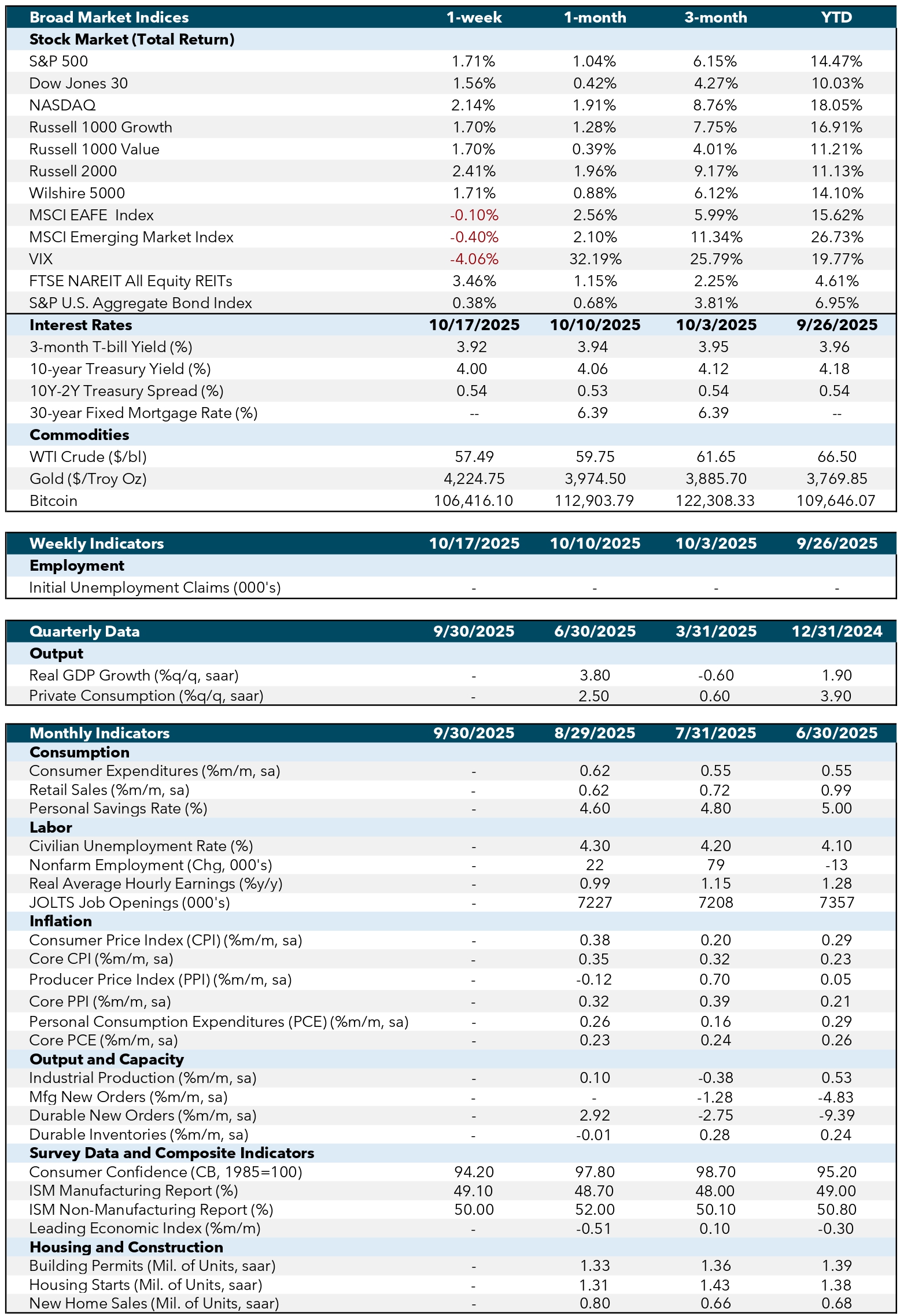
Economic and Capital Markets Dashboard

Week Ahead…

The upcoming week will include multiple economic releases that will refine investor expectations for growth, inflation, and Federal Reserve policy.

Tuesday will include the release of both the U.S. Manufacturing and Services Purchasing Managers’ Index (PMI), offering an early read on economic activity over March. The Manufacturing PMI will be watched for confirmation that strength in regional factory surveys is translating to the national level. The Services PMI will be monitored for signs that consumer demand remains intact despite elevated prices and borrowing costs.

On Wednesday, the February import and export price indexes will be watched for signals on pipeline inflation. Investors will be assessing the pass-through of higher energy costs, tariffs, and currency effects into domestic pricing. Firm readings could reinforce recent economic readings reflecting persistent cost pressures.

On Thursday, initial and continuing jobless claims will provide a signal on employment stability. Low claims could reinforce the view that layoffs remain contained, even as firms stay cautious about adding new workers.

The week will conclude with the University of Michigan Consumer Sentiment survey, including inflation expectations. This survey will be closely watched by investors and policymakers, as elevated expectations could support the Federal Reserve’s cautious, data-driven policy stance.

Economic Indicators:

  1. CPI: Consumer Price Index measures the average change in prices paid by consumers for goods and services over time. Source: Bureau of Labor Statistics.
  2. Core CPI: Core Consumer Price Index excludes food and energy prices to provide a clearer picture of long-term inflation trends. Source: Bureau of Labor Statistics.
  3. PPI: Producer Price Index measures the average change in selling prices received by domestic producers for their output. Source: Bureau of Labor Statistics.
  4. Core PPI: Core Producer Price Index excludes food and energy prices to provide a clearer picture of long-term inflation trends. Source: Bureau of Labor Statistics.
  5. PCE: Personal Consumption Expenditures measure the average change in prices paid by consumers for goods and services. Source: Bureau of Economic Analysis.
  6. Core PCE: Core Personal Consumption Expenditures exclude food and energy prices to provide a clearer picture of long-term inflation trends. Source: Bureau of Economic Analysis.
  7. Industrial Production: Measures the output of the industrial sector, including manufacturing, mining, and utilities. Source: Federal Reserve.
  8. Mfg New Orders: Measures the value of new orders placed with manufacturers for durable and non-durable goods. Source: Census Bureau.
  9. Durable New Orders: Measures the value of new orders placed with manufacturers of durable goods. Source: Census Bureau.
  10. Durable Inventories: Measures the value of inventories held by manufacturers for durable goods. Source: Census Bureau.
  11. Consumer Confidence (CB, 1985=100): Measures the degree of optimism that consumers feel about the overall state of the economy and their personal financial situation. Source: Conference Board.
  12. ISM Manufacturing Report: Measures the economic health of the manufacturing sector based on surveys of purchasing managers. Source: Institute for Supply Management.
  13. ISM Non-Manufacturing Report: Measures the economic health of the non-manufacturing sector based on surveys of purchasing managers. Source: Institute for Supply Management.
  14. Leading Economic Index: Measures overall economic activity and predicts future economic trends. Source: Conference Board.
  15. Building Permits (Mil. of Units, saar): Measures the number of new residential building permits issued. Source: Census Bureau.
  16. Housing Starts (Mil. of Units, saar): Measures the number of new residential construction projects that have begun. Source: Census Bureau.
  17. New Home Sales (Mil. of Units, saar): Measures the number of newly constructed homes sold. Source: Census Bureau.
  18. SA: Seasonally adjusted.
  19. SAAR: Seasonally adjusted annual rate.

Market Indices & Indicators:

  1. S&P 500: A market-capitalization-weighted index of 500 leading publicly traded companies in the U.S., widely regarded as one of the best gauges of large U.S. stocks and the stock market overall.
  2. Dow Jones 30: Also known as the Dow Jones Industrial Average, it tracks the share price performance of 30 large, publicly traded U.S. companies, serving as a barometer of the stock market and economy.
  3. NASDAQ: The world’s first electronic stock exchange, primarily listing technology giants and operating 29 markets globally.
  4. Russell 1000 Growth: Measures the performance of large-cap growth segment of the U.S. equity universe, including companies with higher price-to-book ratios and growth metrics.
  5. Russell 1000 Value: Measures the performance of large-cap value segment of the U.S. equity universe, including companies with lower price-to-book ratios and growth metrics.
  6. Russell 2000: A market index composed of 2,000 small-cap companies, widely used as a benchmark for small-cap mutual funds.
  7. Wilshire 5000: A market-capitalization-weighted index capturing the performance of all American stocks actively traded in the U.S., representing the broadest measure of the U.S. stock market.
  8. MSCI EAFE Index: An equity index capturing large and mid-cap representation across developed markets countries around the world, excluding the U.S. and Canada.
  9. MSCI Emerging Market Index: Captures large and mid-cap representation across emerging markets countries, covering approximately 85% of the free float-adjusted market capitalization in each country.
  10. VIX: The CBOE Volatility Index measures the market’s expectations for volatility over the coming 30 days, often referred to as the “fear gauge.”
  11. FTSE NAREIT All Equity REITs: Measures the performance of all publicly traded equity real estate investment trusts (REITs) listed in the U.S., excluding mortgage REITs.
  12. S&P U.S. Aggregate Bond Index: Represents the performance of the U.S. investment-grade bond market, including government, corporate, mortgage-backed, and asset-backed securities.
  13. 3-Month T-bill Yield (%): The yield on U.S. Treasury bills with a maturity of three months, reflecting short-term interest rates.
  14. 10-Year Treasury Yield (%): The yield on U.S. Treasury bonds with a maturity of ten years, reflecting long-term interest rates.
  15. 10Y-2Y Treasury Spread (%): The difference between the yields on 10-year and 2-year U.S. Treasury bonds, often used as an indicator of economic expectations.
  16. WTI Crude ($/bl): The price per barrel of West Texas Intermediate crude oil, a benchmark for U.S. oil prices.
  17. Gold ($/Troy Oz): The price per troy ounce of gold, a standard measure for gold prices.
  18. Bitcoin: A decentralized digital currency without a central bank or single administrator, which can be sent from user to user on the peer-to-peer bitcoin network.

This content was developed by Cambridge from sources believed to be reliable. This content is provided for informational purposes only and should not be construed or acted upon as individualized investment advice. It should not be considered a recommendation or solicitation. Information is subject to change. Any forward-looking statements are based on assumptions, may not materialize, and are subject to revision without notice. The information in this material is not intended as tax or legal advice.

Investing involves risk. Depending on the different types of investments there may be varying degrees of risk. Socially responsible investing does not guarantee any amount of success. Clients and prospective clients should be prepared to bear investment loss including loss of original principal. Indices mentioned are unmanaged and cannot be invested into directly. Past performance is not a guarantee of future results.

The Dow Jones Industrial Average (DJIA) is a price-weighted index composed of 30 widely traded blue-chip U.S. common stocks. The S&P 500 is a market-cap weighted index composed of the common stocks of 500 leading companies in leading industries of the U.S. economy. The NASDAQ Composite Index is a market-value weighted index of all common stocks listed on the NASDAQ stock exchange.

Securities offered through Cambridge Investment Research, Inc., a broker-dealer, member FINRA/SIPC, and investment advisory services offered through Cambridge Investment Research Advisors, Inc., a Registered Investment Adviser. Both are wholly-owned subsidiaries of Cambridge Investment Group, Inc. V.CIR.0326-1021

Market Commentary | October 27th, 2025

Market Commentary | October 27th, 2025

Weekly Market Commentary

October 27th, 2025

Week in Review…

The most impactful release of the week was Friday’s Consumer Price Index (CPI) report. Both headline and core CPI came in slightly below expectations, with core CPI rising 0.2% versus 0.3% anticipated. Given the Fed’s preference for core inflation as a gauge of underlying price pressures, this softer print suggests inflation is sticky but trending lower, though still above the Fed’s target.

Another notable development was the 5-year Treasury Inflation-Protected Securities (TIPS) auction, which cleared at 1.182%, down from 1.650% in the prior auction. Interestingly, the 5-year breakeven inflation rate held near 2.42%, signaling markets expect lower real rates while inflation expectations remain anchored. The rationale is unclear — whether it reflects slowing growth, a flight to quality, or expectations of a lower Fed Funds rate as the Fed gravitates toward a lower neutral rate is yet to be determined. This dynamic likely explains why longer-dated yields, such as the 20-year Treasury auction, also came in below previous levels, reinforcing the notion that investors anticipate lower real rates despite static inflation expectations.

On the consumer side, the University of Michigan finalized October inflation expectations, showing 1-year expectations declining in line with forecasts, but 5-year expectations surprising to the upside at 3.9% versus 3.7% previously. This divergence suggests consumers anticipate higher inflation over the long run, even as near-term pressures ease.

Quick Hitters

  • Housing: September existing home sales rose 1.5% month-over-month, in line with expectations. This uptick hints at resilient demand and suggests structurally lower rates could unlock further housing activity.
  • Business Activity: Preliminary S&P Global Manufacturing and Services Purchasing Managers’ Indexes (PMIs) exceeded expectations and prior readings, signaling improving sentiment and underlying economic strength
  • Consumer Sentiment: In contrast, the University of Michigan consumer sentiment index softened, highlighting concerns about household confidence. Given consumption’s critical role in gross domestic product (GDP), markets will monitor this trend.

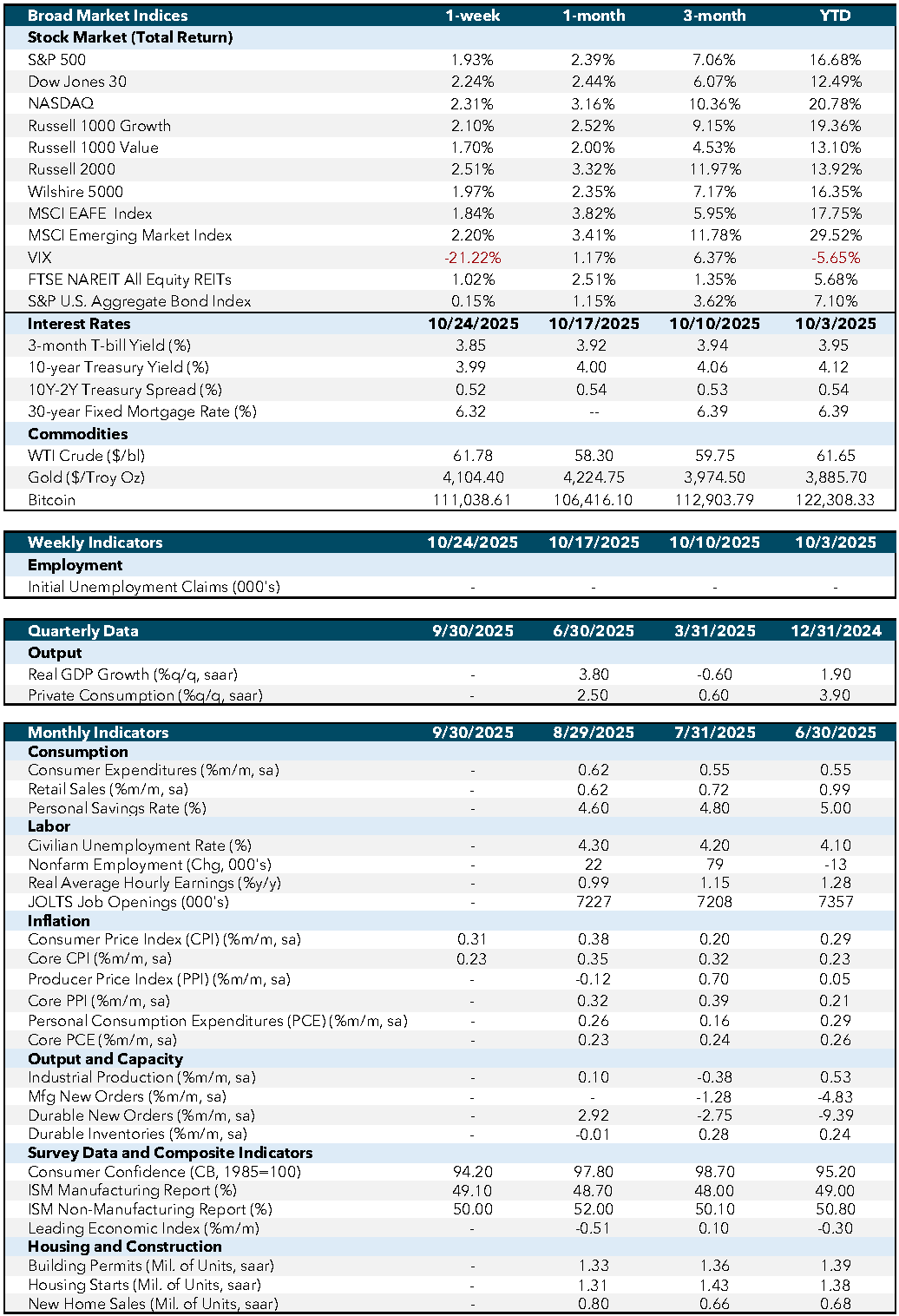
Economic and Capital Markets Dashboard

Week Ahead…

With inflation easing and markets nearly certain of a rate cut, attention now shifts to what comes next. The week ahead brings the Federal Open Market Committee (FOMC) meeting into sharp focus, alongside a handful of consumer and demand indicators that could shape expectations for growth and policy.

The upcoming FOMC meeting will dominate market attention. Last week’s softer CPI print reinforced a picture of easing inflation pressures, but the Fed faces a limited data backdrop, particularly on labor market conditions. With few fresh indicators, policymakers may lean on secondary sources to gauge economic momentum. Despite this uncertainty, markets remain confident in a 25 bps rate cut, with odds holding near 98%.

Beyond the Fed, this week’s economic calendar is light due to the government shutdown, but several releases will help gauge consumer and demand trends. On Tuesday, the Conference Board Consumer Confidence Index will measure household optimism — a key driver of spending and growth. On Wednesday, the pending home sales report offers a forward-looking view of housing demand, signaling whether lower rates are unlocking buyer activity. Additionally, the weekly crude oil inventory report may draw more attention than usual. Last week broke a three-week streak of weaker-than-expected demand, and with limited macro data available, markets could use these figures as a proxy for broader economic activity.

Economic Indicators:

  1. CPI: Consumer Price Index measures the average change in prices paid by consumers for goods and services over time. Source: Bureau of Labor Statistics.
  2. Core CPI: Core Consumer Price Index excludes food and energy prices to provide a clearer picture of long-term inflation trends. Source: Bureau of Labor Statistics.
  3. PPI: Producer Price Index measures the average change in selling prices received by domestic producers for their output. Source: Bureau of Labor Statistics.
  4. Core PPI: Core Producer Price Index excludes food and energy prices to provide a clearer picture of long-term inflation trends. Source: Bureau of Labor Statistics.
  5. PCE: Personal Consumption Expenditures measure the average change in prices paid by consumers for goods and services. Source: Bureau of Economic Analysis.
  6. Core PCE: Core Personal Consumption Expenditures exclude food and energy prices to provide a clearer picture of long-term inflation trends. Source: Bureau of Economic Analysis.
  7. Industrial Production: Measures the output of the industrial sector, including manufacturing, mining, and utilities. Source: Federal Reserve.
  8. Mfg New Orders: Measures the value of new orders placed with manufacturers for durable and non-durable goods. Source: Census Bureau.
  9. Durable New Orders: Measures the value of new orders placed with manufacturers of durable goods. Source: Census Bureau.
  10. Durable Inventories: Measures the value of inventories held by manufacturers for durable goods. Source: Census Bureau.
  11. Consumer Confidence (CB, 1985=100): Measures the degree of optimism that consumers feel about the overall state of the economy and their personal financial situation. Source: Conference Board.
  12. ISM Manufacturing Report: Measures the economic health of the manufacturing sector based on surveys of purchasing managers. Source: Institute for Supply Management.
  13. ISM Non-Manufacturing Report: Measures the economic health of the non-manufacturing sector based on surveys of purchasing managers. Source: Institute for Supply Management.
  14. Leading Economic Index: Measures overall economic activity and predicts future economic trends. Source: Conference Board.
  15. Building Permits (Mil. of Units, saar): Measures the number of new residential building permits issued. Source: Census Bureau.
  16. Housing Starts (Mil. of Units, saar): Measures the number of new residential construction projects that have begun. Source: Census Bureau.
  17. New Home Sales (Mil. of Units, saar): Measures the number of newly constructed homes sold. Source: Census Bureau.
  18. SA: Seasonally adjusted.
  19. SAAR: Seasonally adjusted annual rate.

Market Indices & Indicators:

  1. S&P 500: A market-capitalization-weighted index of 500 leading publicly traded companies in the U.S., widely regarded as one of the best gauges of large U.S. stocks and the stock market overall.
  2. Dow Jones 30: Also known as the Dow Jones Industrial Average, it tracks the share price performance of 30 large, publicly traded U.S. companies, serving as a barometer of the stock market and economy.
  3. NASDAQ: The world’s first electronic stock exchange, primarily listing technology giants and operating 29 markets globally.
  4. Russell 1000 Growth: Measures the performance of large-cap growth segment of the U.S. equity universe, including companies with higher price-to-book ratios and growth metrics.
  5. Russell 1000 Value: Measures the performance of large-cap value segment of the U.S. equity universe, including companies with lower price-to-book ratios and growth metrics.
  6. Russell 2000: A market index composed of 2,000 small-cap companies, widely used as a benchmark for small-cap mutual funds.
  7. Wilshire 5000: A market-capitalization-weighted index capturing the performance of all American stocks actively traded in the U.S., representing the broadest measure of the U.S. stock market.
  8. MSCI EAFE Index: An equity index capturing large and mid-cap representation across developed markets countries around the world, excluding the U.S. and Canada.
  9. MSCI Emerging Market Index: Captures large and mid-cap representation across emerging markets countries, covering approximately 85% of the free float-adjusted market capitalization in each country.
  10. VIX: The CBOE Volatility Index measures the market’s expectations for volatility over the coming 30 days, often referred to as the “fear gauge.”
  11. FTSE NAREIT All Equity REITs: Measures the performance of all publicly traded equity real estate investment trusts (REITs) listed in the U.S., excluding mortgage REITs.
  12. S&P U.S. Aggregate Bond Index: Represents the performance of the U.S. investment-grade bond market, including government, corporate, mortgage-backed, and asset-backed securities.
  13. 3-Month T-bill Yield (%): The yield on U.S. Treasury bills with a maturity of three months, reflecting short-term interest rates.
  14. 10-Year Treasury Yield (%): The yield on U.S. Treasury bonds with a maturity of ten years, reflecting long-term interest rates.
  15. 10Y-2Y Treasury Spread (%): The difference between the yields on 10-year and 2-year U.S. Treasury bonds, often used as an indicator of economic expectations.
  16. WTI Crude ($/bl): The price per barrel of West Texas Intermediate crude oil, a benchmark for U.S. oil prices.
  17. Gold ($/Troy Oz): The price per troy ounce of gold, a standard measure for gold prices.
  18. Bitcoin: A decentralized digital currency without a central bank or single administrator, which can be sent from user to user on the peer-to-peer bitcoin network.

This content was developed by Cambridge from sources believed to be reliable. This content is provided for informational purposes only and should not be construed or acted upon as individualized investment advice. It should not be considered a recommendation or solicitation. Information is subject to change. Any forward-looking statements are based on assumptions, may not materialize, and are subject to revision without notice. The information in this material is not intended as tax or legal advice.

Investing involves risk. Depending on the different types of investments there may be varying degrees of risk. Socially responsible investing does not guarantee any amount of success. Clients and prospective clients should be prepared to bear investment loss including loss of original principal. Indices mentioned are unmanaged and cannot be invested into directly. Past performance is not a guarantee of future results.

The Dow Jones Industrial Average (DJIA) is a price-weighted index composed of 30 widely traded blue-chip U.S. common stocks. The S&P 500 is a market-cap weighted index composed of the common stocks of 500 leading companies in leading industries of the U.S. economy. The NASDAQ Composite Index is a market-value weighted index of all common stocks listed on the NASDAQ stock exchange.

Securities offered through Cambridge Investment Research, Inc., a broker-dealer, member FINRA/SIPC, and investment advisory services offered through Cambridge Investment Research Advisors, Inc., a Registered Investment Adviser. Both are wholly-owned subsidiaries of Cambridge Investment Group, Inc. V.CIR.1025-3944

Market Commentary | October 20th, 2025

Market Commentary | October 20th, 2025

Weekly Market Commentary

October 20th, 2025

Week in Review…

Economic developments during the week were shaped by key inflation data, central bank commentary, and disruptions caused by the ongoing government shutdown. Together, these events offered insight into the Federal Reserve’s evolving stance and the challenges of navigating a data-constrained environment.

On Tuesday, October 14, Fed Chair Jerome Powell addressed the National Association for Business Economics, warning of “significant downside risks” in the labor market and signaling that the Fed may soon end its balance sheet runoff. Powell emphasized the difficulty of operating without full government data, noting reliance on private labor indicators and that substitutes for official inflation data are “less good.” His remarks reinforced expectations for a more cautious and dovish policy approach.

On Wednesday, the Consumer Price Index (CPI) for September showed a 0.4% month-over-month increase, while Core CPI rose 0.3%, bringing the year-over-year Core CPI to 3.7%. These figures suggest inflation remains persistent but is not accelerating, supporting the view that price pressures are stabilizing.

Thursday’s Producer Price Index (PPI) added complexity to the inflation picture. Headline PPI rose 0.5%, and Core PPI increased 0.3%, reversing the prior month’s decline. The data hinted at renewed wholesale cost pressures, which could eventually filter into consumer prices.

Meanwhile, the government shut down delayed several key reports, including retail sales and the full employment summary. Bloomberg and other sources reported that CPI data collection was strained, and policymakers are increasingly “flying blind” without timely indicators. The shutdown has created a data vacuum, complicating the Fed’s ability to assess economic conditions accurately.

Overall, the week highlighted the Fed’s balancing act: stabilizing inflation, monitoring labor risks, and adjusting policy amid limited visibility. Powell’s tone and the inflation data suggest a shift toward caution as uncertainty grows.

Economic and Capital Markets Dashboard

Week Ahead…

With the government shutdown still in effect, markets continue to operate in a data-constrained environment. The September jobs report remains delayed, and other key releases, including weekly jobless claims and the retail sales report, are also postponed. Even the Consumer Price Index, originally scheduled for October 15, has been pushed to October 24 to support Social Security Cost-of-Living Adjustment (COLA) calculations.

In the absence of fresh government data, investors will increasingly rely on private-sector releases and Fed communications. This week features a heavy slate of speeches from Federal Reserve officials, including Vice Chair Bowman and Governor Barr. With Chair Powell’s expected departure in 2026, markets may begin shifting their attention toward the broader committee for clues on the future policy path, especially as consensus-building becomes more critical in a fragmented data environment.

Additionally, global energy reports may offer indirect insights into economic momentum. The OPEC Monthly Oil Market Report (October 13) and the IEA Monthly Oil Market Report (October 14) will provide detailed views on oil supply, demand, and pricing trends. These reports, unaffected by the shutdown, may help markets assess inflationary pressures and industrial activity through the lens of energy consumption and production.

In this environment, every speech, survey, and tangential indicator may begin to take on outsized importance as markets prepare for the Fed’s October 28–29 meeting.

Economic Indicators:

  1. CPI: Consumer Price Index measures the average change in prices paid by consumers for goods and services over time. Source: Bureau of Labor Statistics.
  2. Core CPI: Core Consumer Price Index excludes food and energy prices to provide a clearer picture of long-term inflation trends. Source: Bureau of Labor Statistics.
  3. PPI: Producer Price Index measures the average change in selling prices received by domestic producers for their output. Source: Bureau of Labor Statistics.
  4. Core PPI: Core Producer Price Index excludes food and energy prices to provide a clearer picture of long-term inflation trends. Source: Bureau of Labor Statistics.
  5. PCE: Personal Consumption Expenditures measure the average change in prices paid by consumers for goods and services. Source: Bureau of Economic Analysis.
  6. Core PCE: Core Personal Consumption Expenditures exclude food and energy prices to provide a clearer picture of long-term inflation trends. Source: Bureau of Economic Analysis.
  7. Industrial Production: Measures the output of the industrial sector, including manufacturing, mining, and utilities. Source: Federal Reserve.
  8. Mfg New Orders: Measures the value of new orders placed with manufacturers for durable and non-durable goods. Source: Census Bureau.
  9. Durable New Orders: Measures the value of new orders placed with manufacturers of durable goods. Source: Census Bureau.
  10. Durable Inventories: Measures the value of inventories held by manufacturers for durable goods. Source: Census Bureau.
  11. Consumer Confidence (CB, 1985=100): Measures the degree of optimism that consumers feel about the overall state of the economy and their personal financial situation. Source: Conference Board.
  12. ISM Manufacturing Report: Measures the economic health of the manufacturing sector based on surveys of purchasing managers. Source: Institute for Supply Management.
  13. ISM Non-Manufacturing Report: Measures the economic health of the non-manufacturing sector based on surveys of purchasing managers. Source: Institute for Supply Management.
  14. Leading Economic Index: Measures overall economic activity and predicts future economic trends. Source: Conference Board.
  15. Building Permits (Mil. of Units, saar): Measures the number of new residential building permits issued. Source: Census Bureau.
  16. Housing Starts (Mil. of Units, saar): Measures the number of new residential construction projects that have begun. Source: Census Bureau.
  17. New Home Sales (Mil. of Units, saar): Measures the number of newly constructed homes sold. Source: Census Bureau.
  18. SA: Seasonally adjusted.
  19. SAAR: Seasonally adjusted annual rate.

Market Indices & Indicators:

  1. S&P 500: A market-capitalization-weighted index of 500 leading publicly traded companies in the U.S., widely regarded as one of the best gauges of large U.S. stocks and the stock market overall.
  2. Dow Jones 30: Also known as the Dow Jones Industrial Average, it tracks the share price performance of 30 large, publicly traded U.S. companies, serving as a barometer of the stock market and economy.
  3. NASDAQ: The world’s first electronic stock exchange, primarily listing technology giants and operating 29 markets globally.
  4. Russell 1000 Growth: Measures the performance of large-cap growth segment of the U.S. equity universe, including companies with higher price-to-book ratios and growth metrics.
  5. Russell 1000 Value: Measures the performance of large-cap value segment of the U.S. equity universe, including companies with lower price-to-book ratios and growth metrics.
  6. Russell 2000: A market index composed of 2,000 small-cap companies, widely used as a benchmark for small-cap mutual funds.
  7. Wilshire 5000: A market-capitalization-weighted index capturing the performance of all American stocks actively traded in the U.S., representing the broadest measure of the U.S. stock market.
  8. MSCI EAFE Index: An equity index capturing large and mid-cap representation across developed markets countries around the world, excluding the U.S. and Canada.
  9. MSCI Emerging Market Index: Captures large and mid-cap representation across emerging markets countries, covering approximately 85% of the free float-adjusted market capitalization in each country.
  10. VIX: The CBOE Volatility Index measures the market’s expectations for volatility over the coming 30 days, often referred to as the “fear gauge.”
  11. FTSE NAREIT All Equity REITs: Measures the performance of all publicly traded equity real estate investment trusts (REITs) listed in the U.S., excluding mortgage REITs.
  12. S&P U.S. Aggregate Bond Index: Represents the performance of the U.S. investment-grade bond market, including government, corporate, mortgage-backed, and asset-backed securities.
  13. 3-Month T-bill Yield (%): The yield on U.S. Treasury bills with a maturity of three months, reflecting short-term interest rates.
  14. 10-Year Treasury Yield (%): The yield on U.S. Treasury bonds with a maturity of ten years, reflecting long-term interest rates.
  15. 10Y-2Y Treasury Spread (%): The difference between the yields on 10-year and 2-year U.S. Treasury bonds, often used as an indicator of economic expectations.
  16. WTI Crude ($/bl): The price per barrel of West Texas Intermediate crude oil, a benchmark for U.S. oil prices.
  17. Gold ($/Troy Oz): The price per troy ounce of gold, a standard measure for gold prices.
  18. Bitcoin: A decentralized digital currency without a central bank or single administrator, which can be sent from user to user on the peer-to-peer bitcoin network.

This content was developed by Cambridge from sources believed to be reliable. This content is provided for informational purposes only and should not be construed or acted upon as individualized investment advice. It should not be considered a recommendation or solicitation. Information is subject to change. Any forward-looking statements are based on assumptions, may not materialize, and are subject to revision without notice. The information in this material is not intended as tax or legal advice.

Investing involves risk. Depending on the different types of investments there may be varying degrees of risk. Socially responsible investing does not guarantee any amount of success. Clients and prospective clients should be prepared to bear investment loss including loss of original principal. Indices mentioned are unmanaged and cannot be invested into directly. Past performance is not a guarantee of future results.

The Dow Jones Industrial Average (DJIA) is a price-weighted index composed of 30 widely traded blue-chip U.S. common stocks. The S&P 500 is a market-cap weighted index composed of the common stocks of 500 leading companies in leading industries of the U.S. economy. The NASDAQ Composite Index is a market-value weighted index of all common stocks listed on the NASDAQ stock exchange.

Securities offered through Cambridge Investment Research, Inc., a broker-dealer, member FINRA/SIPC, and investment advisory services offered through Cambridge Investment Research Advisors, Inc., a Registered Investment Adviser. Both are wholly-owned subsidiaries of Cambridge Investment Group, Inc. V.CIR.1025-3773

Market Commentary | April 21st, 2025

Market Commentary | April 21st, 2025

Weekly Market Commentary

April 21st, 2025

Week in Review…

U.S. equities experienced a downturn last week, reversing the sharp gains from the previous week. Both the S&P 500 and Nasdaq indices have now fallen for the third time in the last four weeks. Treasuries strengthened, leading to a steepening of the yield curve. For the week ending, April 18:

  • The S&P 500 declined by -1.50%
  • The Dow Jones Industrial Average fell by -2.66%
  • The tech-heavy Nasdaq dropped by -2.62%
  • The yield on the 10-Year Treasury rose to 4.34%, up from 4.10% at the end of the previous week

Due to the observance of Good Friday, this week had fewer economic data releases.

On Wednesday, retail sales data revealed a significant 1.4% increase in U.S. retail sales for March. This surge is largely due to consumers rushing to purchase vehicles before the 25% global car and truck tariffs took effect in early April. This follows a modest 0.2% rise in February. However, economic concerns are impacting discretionary spending, with high-income households continuing to drive spending while low-income consumers struggle.

The Federal Reserve delivered a speech on April 16, highlighting the potential for future interest rate adjustments and ongoing volatility in the bond market. Investors are closely monitoring U.S. Treasury yields, which have experienced increased volatility in recent weeks. The Fed’s comments have heightened speculation about the direction of monetary policy, contributing to market uncertainty and affecting global financial markets.

Spotlight

Secondaries Private Equity Market

Private equity (PE) involves investing capital in private companies in exchange for ownership. These companies are not publicly traded, and the capital typically comes from institutional and accredited investors, either directly or through managed funds. Unlike public equity, PE investments are long-term and illiquid. Broadly, as an asset class, PE encompasses various strategies, including venture capital, growth capital, buyouts, and secondary fund of funds investments.

Secondary private equity investments, or secondaries, involve purchasing existing stakes in PE funds from current investors. This market allows buyers to acquire mature, diversified portfolios, often at a discount, providing liquidity to the original investors. Transactions can include direct purchases of fund interests from limited partners (LPs) and general partners (GPs). Secondary-focused PE funds specialize in this market.

Initially, secondary investments offered liquidity to constrained LPs in a niche market with few buyers, stressed sellers, and steep discounts. Today, the secondary PE market is more about strategic portfolio realignment. The growth of the primary PE market has increased the volume of assets available for resale. The market now includes sophisticated entrants like pension funds, sovereign wealth funds, family offices, endowments, foundations, and private wealth intermediaries.

Economic volatility in public equities can create a compelling entry point for investors, driven by the denominator effect, where public pension funds are overallocated to alternative investments due to decline in public market positions. Secondary transactions help investors reduce GP relationships, comply with regulatory changes, and adjust allocation mandates. As institutional investors reduce PE exposure, new investors can purchase these positions at discounts.

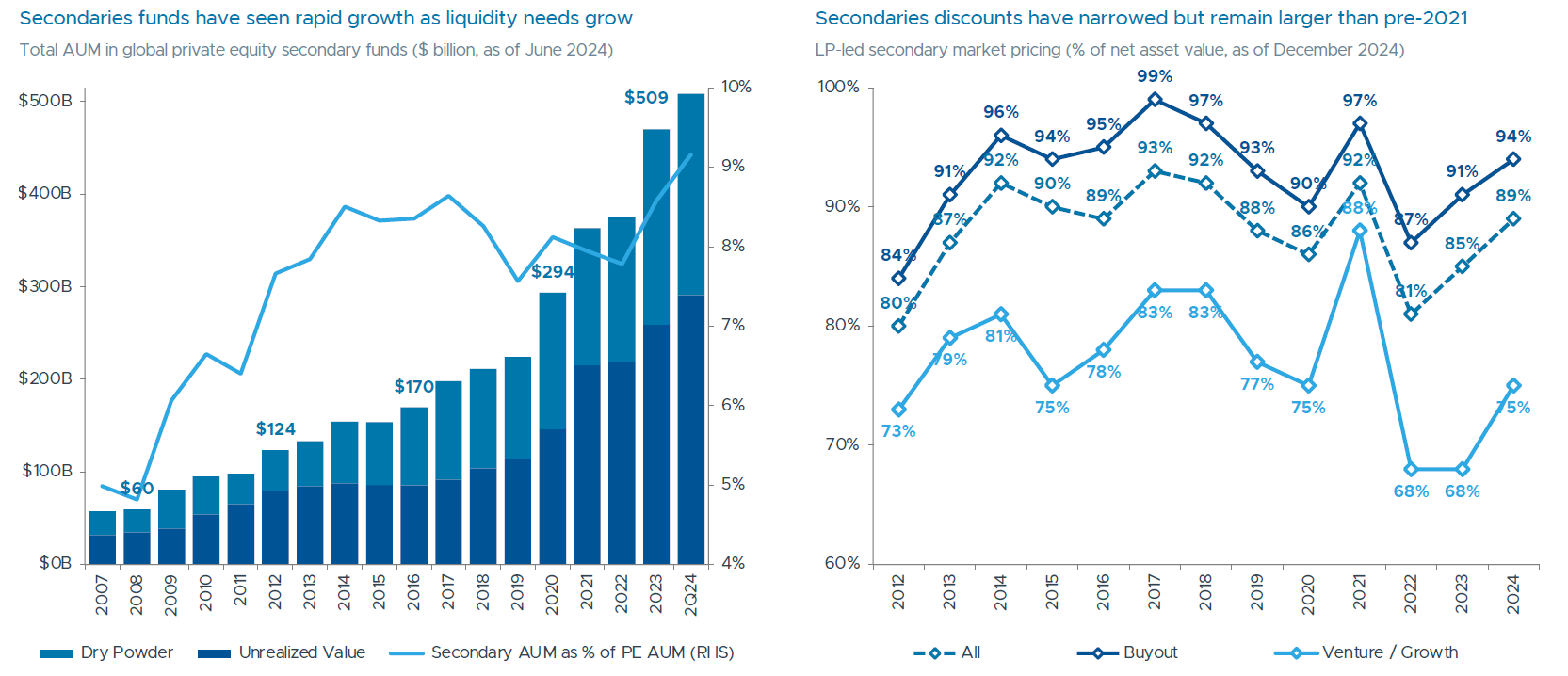
Semi-liquid open-end tender fund structures have enabled accredited investors and qualified clients to access this growing market. Since 2010, PE secondaries assets under management have quadrupled, reaching nearly $509 billion by the end of 2024.

Source – Preqin, iCapital

(click image to expand)

However, investors should weigh the benefits and risks before deciding to allocate to this asset class.

Benefits and Risks of Secondary PE Investments

Benefits:

  1. Mitigation of the J-Curve Effect: Secondary investments can help mitigate the initial negative cash flow pattern typical of PE funds.
  2. Liquidity: Provides liquidity to original investors by allowing them to sell their stakes.
  3. Diversification: Buyers can acquire mature, diversified portfolios, often at a discount.
  4. Reduced Blind Pool Risk: Investors gain immediate exposure to established assets, allowing for more informed investment decisions.
  5. Discounted Entry: Secondary investments are often acquired at a discount, potentially enhancing returns.

Risks:

  1. Valuation Uncertainty: The valuation of secondary PE assets can be complex and may not always reflect current market conditions.
  2. Market Volatility: Secondary markets can be affected by broader economic conditions, impacting the value of investments.
  3. Manager Performance: The success of secondary investments heavily depends on the skill and experience of fund managers.

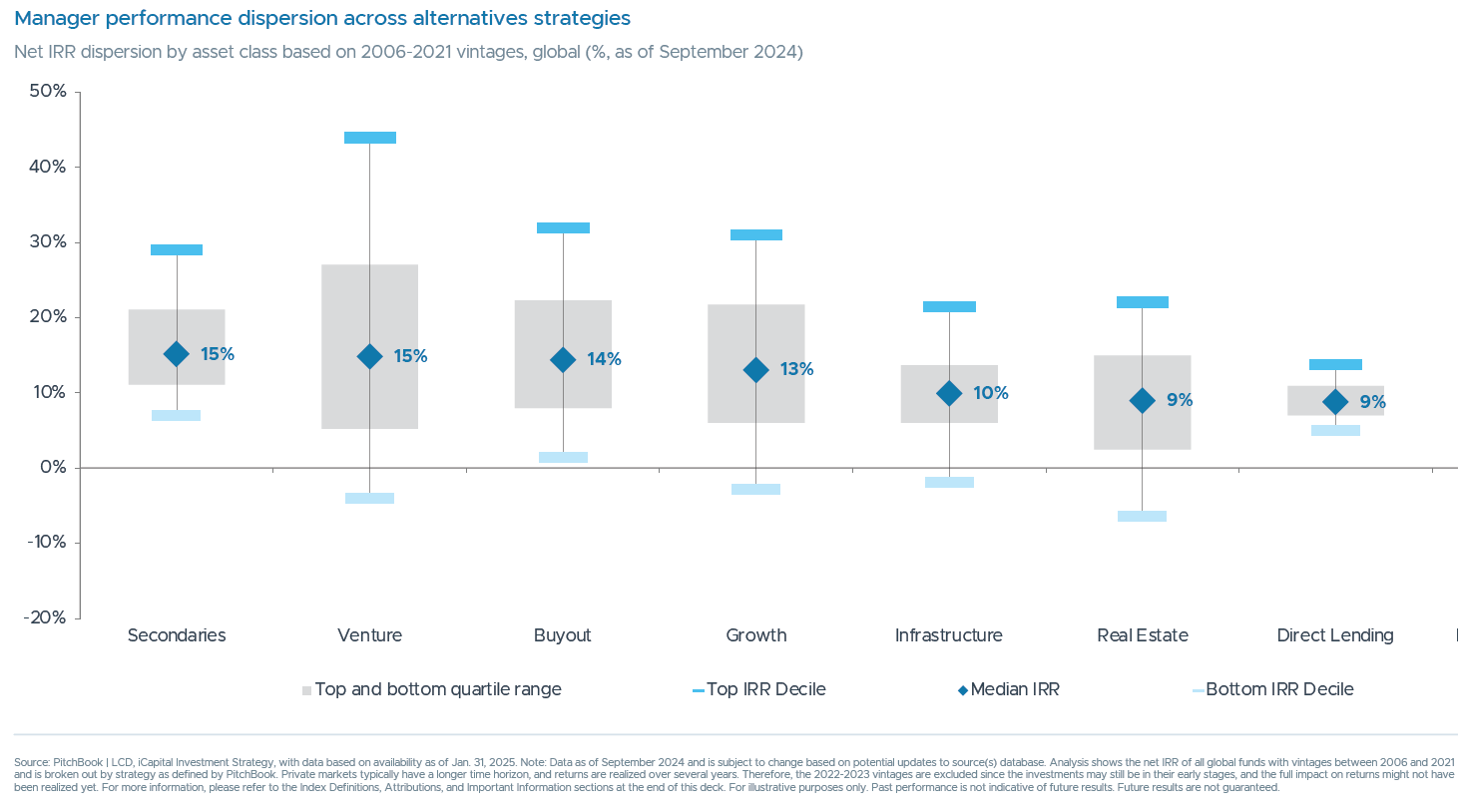
Source – Pitchbook, iCapital

(click image to expand)

Manager Selection and Evergreen Funds

Choosing skilled managers is critical in the secondary PE market due to the significant performance gap between top and bottom quartile managers.

Evergreen semi-liquid funds, such as interval and tender offer funds, now provide continuous access to private equity investments without a fixed end date. These funds pool capital from sophisticated investors to invest in a diversified portfolio of private companies. Unlike traditional closed-end funds, evergreen funds are open-ended, offering easier access to private market investments with lower minimum investments, a semi-liquid structure, and immediate exposure to the asset class.

The secondary PE market offers active opportunities for investors seeking liquidity, diversification, and potentially higher returns. However, it requires careful consideration of the associated risks and the selection of skilled managers. The advent of evergreen funds has democratized access to PE, allowing a wider range of investors to participate in this lucrative market.

Financial professionals are required to undergo additional training mandated by Cambridge and must adhere to Cambridge’s concentration guidelines when considering secondary PE funds for their clients.

Week Ahead…

The upcoming week is filled with significant economic data releases, starting with the Manufacturing Purchasing Managers’ Index (PMI), Services PMI, and New Home Sales.

The Manufacturing PMI and Services PMI are crucial indicators of economic health, measuring the activity levels of purchasing managers in the manufacturing and services sectors, respectively. These indices provide early insights into business conditions, helping investors and policymakers assess the strength of economic growth and potential inflationary pressures. New Home Sales data reflects the number of newly constructed homes sold in the previous month. This is a vital indicator of the housing market’s health and consumer confidence, as strong sales suggest robust demand and economic stability.

Towards the end of next week, we will see the release of Existing Home Sales and Durable Goods Orders. Existing Home Sales data provides a snapshot of the housing market’s performance, indicating the volume of previously owned homes sold during the month. Durable Goods Orders measure new orders placed with manufacturers for goods expected to last at least three years, such as appliances and vehicles.

J-Curve: In private equity, the J-Curve illustrates the typical pattern of investment returns. Initially, returns are negative due to upfront costs and fees. Over time, as investments mature and generate profits, returns increase significantly, forming a “J” shape. This reflects the transition from early losses to substantial gains as investments are successfully realized.

Blind Pool Risk: This refers to the risk associated with investing in a fund where the specific investments are not disclosed beforehand. Investors rely on the fund manager’s expertise and prior track record without knowing the exact assets or companies their money will be invested.

This content was developed by Cambridge from sources believed to be reliable. This content is provided for informational purposes only and should not be construed or acted upon as individualized investment advice. It should not be considered a recommendation or solicitation. Information is subject to change. Any forward-looking statements are based on assumptions, may not materialize, and are subject to revision without notice. The information in this material is not intended as tax or legal advice.

Investing involves risk. Depending on the different types of investments there may be varying degrees of risk. Socially responsible investing does not guarantee any amount of success. Clients and prospective clients should be prepared to bear investment loss including loss of original principal. Indices mentioned are unmanaged and cannot be invested into directly. Past performance is not a guarantee of future results.

The Dow Jones Industrial Average (DJIA) is a price-weighted index composed of 30 widely traded blue-chip U.S. common stocks. The S&P 500 is a market-cap weighted index composed of the common stocks of 500 leading companies in leading industries of the U.S. economy. The NASDAQ Composite Index is a market-value weighted index of all common stocks listed on the NASDAQ stock exchange.

An alternative investments strategy is subject to a number of risks and is not suitable for all investors. Investing in alternative investments is only intended for experienced and sophisticated investors who are willing to bear the high economic risk associated with such an investment. Certain risks may include but are not limited to the following: loss of all or a substantial portion of the investment, short selling or other speculative practices, lack of liquidity, volatility of returns, absence of information regarding valuations and pricing, complex tax structures and delays in tax reporting.

Securities offered through Cambridge Investment Research, Inc., a broker-dealer, member FINRA/SIPC, and investment advisory services offered through Cambridge Investment Research Advisors, Inc., a Registered Investment Adviser. Both are wholly-owned subsidiaries of Cambridge Investment Group, Inc. V.CIR.0425-1623