Weekly Market Commentary | October 21st, 2024

Weekly Market Commentary | October 21st, 2024

Week in Review…

As quarterly earnings come to an end, all major indices ended the week in positive territory, as small caps led with the Russell 2000 ending the week up 1.87%, leading to signs that small cap stocks are continuing their third quarter turnaround this year. Weekly performance for the week ending October 18, 2024:

  • The S&P 500 rose last week 0.85%
  • The Dow Jones Industrial Average climbed 0.96%
  • The Nasdaq finished the week up 0.26%
  • The 10-Year Treasury yield ended the week at 4.08%

Last week the market wrapped up quarterly earnings for many of the large U.S. banks and most were able to exceed profit expectations. Drivers of these profits and future economic conditions were key takeaways from the earnings reports. Year-over-year, banks are having to spend more to retain deposits to fund their loan programs and as a result, saw a decrease in net interest margin. The Federal Reserve’s September rate cut should help reduce this cost; however, banks like JPMorgan are still expecting margin compression to continue into the next quarter. On the other hand, a major driver in bank profitability was the Investment Banking and Wealth Management divisions. Looking forward, banks like JPMorgan, Citibank, and Goldman Sachs significantly increased the amount of cash set aside for potential credit losses. 

On Thursday, the market received important updates on the overall strength of the economy. Thursday provided two indicators that consumer demand and economic activity remain strong. For starters, the Census Bureau released September month-over-month headline and Core Retail Sales. Core Retail Sales significantly exceeded expectations, coming in at 0.5%, compared to a forecasted 0.1%. The report showed that consumer demand is strong, and by extension, so is the U.S. economy. Because consumer spending accounts for a large percentage of U.S. gross domestic product (GDP), this report is viewed as a bullish indicator for future GDP forecasts.

Thursday also provided an update on crude oil inventories, which is a key indicator of economic activity/demand. Once again, economic activity and demand proved to be robust as oil inventories decreased by 3.991 million barrels.

Friday was headlined by Netflix’s blowout earnings and September housing data. Netflix reported increases in both revenues and net income. The company also reported an increase in total subscribers of 14%. On the housing front, the Census Bureau reported fewer-than-expected new building permits, and the U.S. Department of Commerce reported fewer-than expected housing starts. Both reports indicate the adverse effect higher interest rates are having on builders.

In summary, the economy appears to be doing well, and this strength is being reflected in corporate earnings. However, sluggish housing growth and potential credit losses will need to be monitored going forward.

Spotlight

How Homeownership is Being Redefined by Enviornmental Uncertainty

The numerous environmental and financial challenges resulting from recent natural disasters in the U.S. have left many Americans financially struggling, wondering what might happen next, and if there are any preventative measures that should be taken. According to an analysis published by Nature Climate Change, over 14 million U.S. properties are at risk of flooding, with annual damages exceeding $32 billion. By 2050, these numbers will rise by at least 11%, adding substantial pressure to insurers, mortgage lenders, and property owners.

Millions of Americans have been watching with an alarm as their homeowners insurance premiums have risen and their coverage has shrunk in recent years. According to LendingTree, premiums have risen 37.8% nationwide since 2019, and continued to rise 5.8% merely in the first quarter of 2024. As stated by Insurify, if a claim is made, the insurance rates will go even higher, as much as 25%, if you claim a total loss of your home. Because of this, most properties are simply covered with HO-3 (standard), while riders such as flood and earthquake insurance are being passed due to cost.

Average Annual Cost of Home Insurance 

As a result of the increasing premiums from claims and natural disasters, climate risks have become a crucial factor in the home-buying decision. Zillow has stated that more than 80% of potential home buyers now consider climate risks when choosing a home. However, it’s not just about knowing the risks; understanding how they impact long-term affordability, particularly through rising insurance costs, is just as important.

During the house-hunting process, there are five key climate risks that home buyers are considering:

  1. Flood
  2. Wildfire
  3. Wind
  4. Heat
  5. Air quality

Climate risks are a major concern for younger home shoppers, who are currently driving the housing market. The median age of today’s home buyer is 39, and first-time buyers make up 50% of all buyers. According to Zillow, Millennial and Gen Z shoppers, who comprise 54% of all home buyers, are most likely to consider climate risk when determining where to shop for a home.

Percentage of Climate Risk Considerations Per Generational Class 

As of the beginning of October, all three major house hunting sites (Zillow, Realtor.com, and Redfin) provide ratings for each climate criteria pertaining to the area of every individual listing. Understanding a home’s vulnerability to risks like flooding and wildfires also plays an important role in other aspects of a homeowner’s financial health, such as financial planning, since the cost of insuring a property against climate-related risks can dramatically influence monthly payments and the affordability of a home. For sellers, having a clear understanding of a property’s climate risk can be equally valuable. Sellers can take proactive measures to mitigate hazards, such as flood-proofing or adding fire-resistant landscaping, which can enhance the home’s appeal and market value, and minimize unexpected issues at closing.

With these five published climate-risk criteria, a new concerning trend has emerged — many homes in climate-risk areas are overvalued. For example, a study shows that properties within the 100-year flood zone are priced at about 8.5% higher than they should be, as flood risks are often not fully accounted for in market values. This has sparked fears of a potential real estate bubble in these risky areas, as home prices may eventually deflate, leaving homeowners vulnerable to financial losses. With flood risks not properly factored into home values, many Americans could face significant losses in home equity, causing ripple effects on local governments heavily relying on property taxes.

Municipalities all over the U.S. will need to make their communities more resilient despite climate change. According to Redfin, paying for mitigation and adaptation measures will likely need to be funded through an increase in property taxes and fees. Additionally, as people leave coastal communities due to flooding, or tropical areas due to hurricanes, the tax base in those areas will shrink, further driving up taxes for those that remain. 

With increased property taxes and a decrease in the resale value of homes with high climate risk, the local GDP of that area will start to deteriorate due to less economic activity and residential occupancy. Consequently, these areas will start to become underdeveloped, and eventually become deserted. Furthermore, since insurance companies are charging more for coverage in climate-risk areas due to the increased risk that they will have to pay out claims, catastrophe bonds are gaining more market share. These bonds provide the insurance company sources of funding when such a condition occurs, also providing short-term diversification benefits against market and economic risks for the investor.

Week Ahead…

Looking ahead to next week, we anticipate a relatively quiet period for economic data. We will receive the first reports on Existing Home Sales and New Home Sales since the Federal Reserve began cutting interest rates, which will help us assess the current state of the residential real estate market. It’s important to note that the effects of interest rate changes take time to reflect in housing data indicators, and market participants are expecting minimal changes with these upcoming releases.

Market participants will closely monitor the Manufacturing and Services Purchasing Managers Index (PMI) on Thursday. The PMI offers a forward-looking view on the economy’s health, which will help shape the market’s expectations regarding future interest rate cuts.

The University of Michigan’s consumer sentiment data, set for release on Friday, will be closely observed. Last month’s sentiment was 1.2 index points lower than October, but remained well within the margin of error, following two straight months of gains. While inflation expectations have eased substantially, consumers will likely continue to express frustration over high prices. Consumers will likely remain cautious with elevated geopolitical tension and the upcoming election.

This content was developed by Cambridge from sources believed to be reliable. This content is provided for informational purposes only and should not be construed or acted upon as individualized investment advice. It should not be considered a recommendation or solicitation. Information is subject to change. Any forward-looking statements are based on assumptions, may not materialize, and are subject to revision without notice. The information in this material is not intended as tax or legal advice.

Investing involves risk. Depending on the different types of investments there may be varying degrees of risk. Socially responsible investing does not guarantee any amount of success. Clients and prospective clients should be prepared to bear investment loss including loss of original principal. Indices mentioned are unmanaged and cannot be invested into directly. Past performance is not a guarantee of future results.

The Dow Jones Industrial Average (DJIA) is a price-weighted index composed of 30 widely traded blue-chip U.S. common stocks. The S&P 500 is a market-cap weighted index composed of the common stocks of 500 leading companies in leading industries of the U.S. economy. The NASDAQ Composite Index is a market-value weighted index of all common stocks listed on the NASDAQ stock exchange.
Weekly Market Commentary | October 14th, 2024

Weekly Market Commentary | October 14th, 2024

Week in Review…

With all major indices posting positive results, the S&P 500 also ended at a fresh all-time high, closing above 5,800 for the first time. Meanwhile, the Nasdaq is now approximately 1.6% below its July 10 record close. Weekly performance for the week ending October 11, 2024 was:

  • The S&P 500 rose 1.11%
  • The Dow Jones Industrial Average climbed 1.21%
  • The Nasdaq finished the week up 1.31%
  • The 10-Year Treasury yield ended the week at 4.094%

The Federal Open Market Committee (FOMC) minutes from the September meeting provided additional context for the Federal Reserve’s decision to implement a 50-bps rate cut. A substantial majority of participants supported this larger cut, viewing it as a recalibration of interest rates rather than an emergency measure. This decision reflects the Fed’s confidence in the progress made towards its inflation goal, while also acknowledging the need to balance risks to both employment and inflation targets.

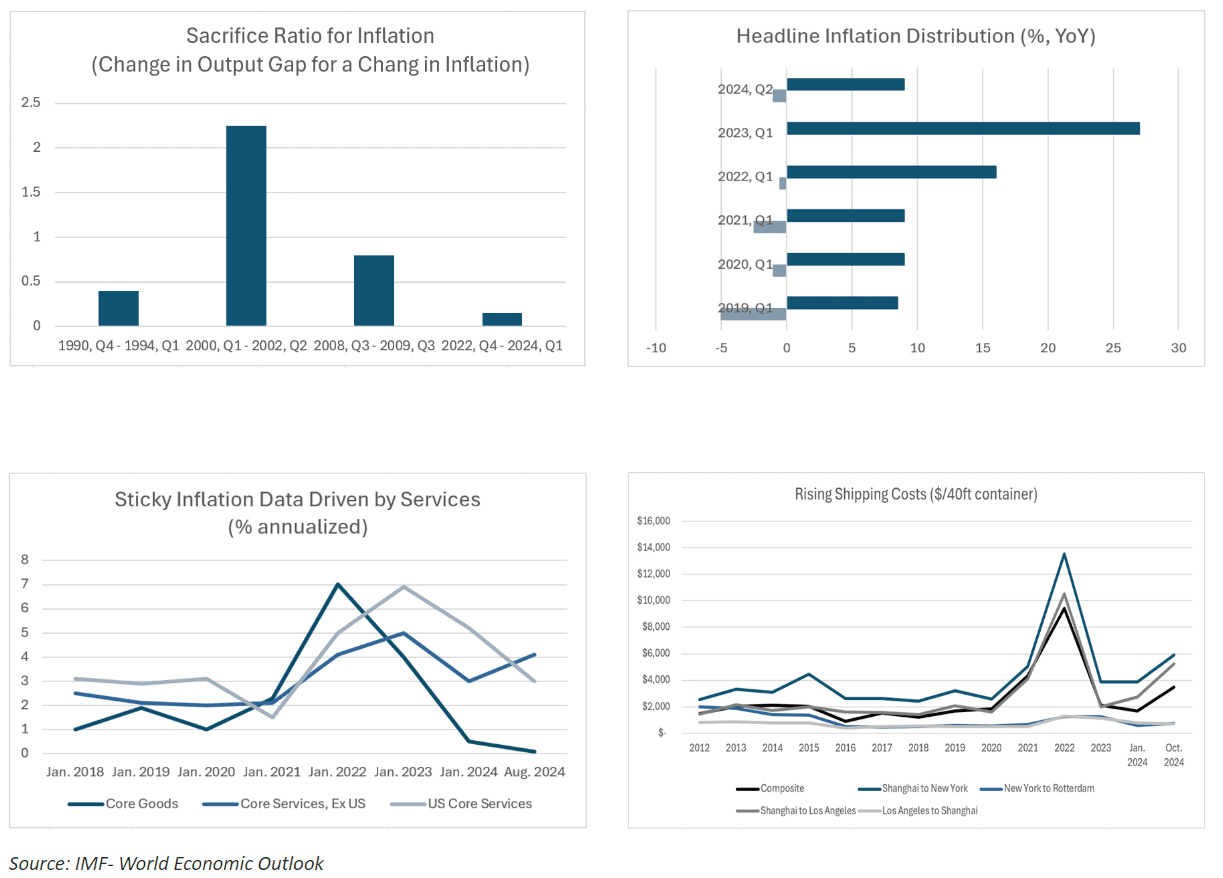
The release of Consumer Price Index (CPI) data on Thursday was crucial for shaping inflation expectations. Both headline and core CPI came in slightly above forecasts, with headline CPI (September year-over-year (YoY)) at 2.4% and core CPI (September YoY) at 3.3%. These figures suggest that inflation may remain persistent, potentially impacting future rate cut expectations and market pricing.

The impact of sticky inflation expectations was evident in the bond market. The 10-year Note Auction on Wednesday showed a significant increase in interest rates, rising from 3.648% to 4.066% over the past month. Similarly, 30-year bond rates climbed from 4.015% to 4.389%. Consequently, Freddie Mac reported a jump in the average 30-year fixed-rate mortgage to 6.32%, up from 6.12% the previous week. This was not welcomed news in an already sluggish residential housing market. 

Two major regulatory decisions made headlines last week. The Department of Justice filed a 32-page document proposing sanctions against Google following its guilty verdict in an antitrust case. These proposed sanctions may have far-reaching implications for other tech giants like Apple, Microsoft, and Amazon. Separately in the banking sector, TD Bank pleaded guilty to violating federal anti-money laundering and bank transparency laws. The bank faces a record-breaking $3.1 billion fine under the Bank Secrecy Act and will have its total assets capped at $434 billion. This penalty underscores the increasing regulatory scrutiny in the financial sector.

Spotlight

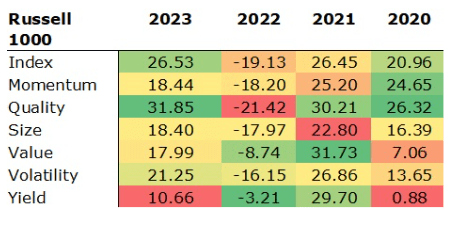
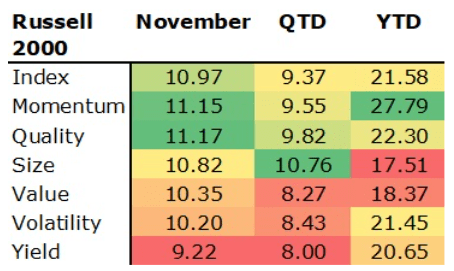
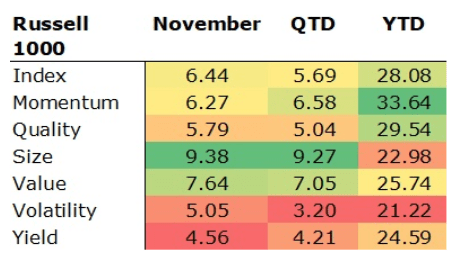
Unpacking Factor Performance Year-to-Date in 2024

Factor investing is an investment approach that targets specific drivers of returns across asset classes, known as factors.

Traditional asset allocation typically involves dividing investments among broad asset classes like stocks, bonds, and cash based on an investor’s risk tolerance and goals. In contrast, factor investing goes a step further by focusing on specific attributes within those asset classes that have historically driven return. In other words, practitioners claim that factor investing offers a more granular, systematic approach to portfolio construction by targeting specific return drivers within asset classes, potentially enhancing diversification, risk management, and outperformance compared to traditional asset allocation. The research team had written a snapshot on factor investing in an earlier article that was published on November 27, 2023.

These factors are quantifiable characteristics that can explain differences in stock returns. The main types of factors include:

  • Style factors (e.g., value, momentum, quality, size)
  • Macroeconomic factors (e.g., economic growth, inflation, interest rates)

Performance Review

Using the MSCI Factor indices as the basis for performance, the following inferences can be derived: 

  • MSCI USA Factors
    • Top performers:
      • Minimum Volatility (Q3: 9.21%)
      • Momentum (YTD: 30.33%, TTM: 46.84%)
      • Quality (YTD: 24.48%, TTM: 39.30%)
    • MSCI World ex USA Factors
      • Top performers:
        • Minimum Volatility (Q3: 11.51%)
        • Momentum (YTD: 18.90%, TTM: 30.92%)
      • Underperformer:
        • Yield (Q3: 0.74%, YTD: 2.24%, TTM: 3.04%)

Key Highlights

MSCI USA Factors Outperform World ex USA Counterparts

The stronger performance of USA factors relative to their World ex USA counterparts suggests:

  • Continued strength of the U.S. economy compared to other developed markets
  • Possible currency effects favoring U.S. investments
  • Differences in sector composition between U.S. and international markets

Momentum: A Standout Factor

  • Momentum emerged as a leading factor in both regions, particularly over longer timeframes
  • This implies:
    • Continuation of existing market trends
    • Strong performance in certain sectors and stocks
    • Possible concentration in high-growth areas

Minimum Volatility Factors Gain Traction

  • Minimum volatility factors performed well in Q3 2024 in both regions
  • Strong Q3 performance suggests increased investor preference for lower-risk strategies
  • Possible drivers include economic uncertainty, market volatility concerns, and a shift towards defensive positioning

Equal Weighted Indices Show Solid Performance

  • Solid performance of equal weighted indices suggests:
    • Healthy market breadth
    • Possible rotation into mid-sized or small cap companies

Quality Factors Demonstrate Strength

  • Quality factors, although moderate in the near term, showed solid performance over the trailing 12 months, particularly in the USA
  • This suggests:
    • Investor preference for companies with strong fundamentals
    • Focus on stable earnings and low debt
    • Possible “flight to quality” due to economic concerns

Other Factor Performances

  • Value factors performed moderately well, with better returns in World ex USA for Q3
  • Low size factors (large and mid-cap companies per MSCI definition) demonstrated strong performance, particularly in World ex USA
  • Yield factors significantly underperformed, especially in World ex USA markets
    • Potential reasons include:
      • Rising interest rates
      • Shift away from traditional dividend-paying sectors
      • Preference for growth over income

In today’s investment landscape, factor-based ETF products have become increasingly popular among private wealth investors. These products, provided by prominent asset managers, seek to harness specific factor premiums while ensuring transparency and liquidity. Understanding factor interactions is also crucial for effective portfolio construction, as combining low-correlation factors can potentially improve risk-adjusted returns and reduce underperformance periods. Recent research favors multi-factor approaches over factor timing, a trend observed in both U.S. and international developed markets. While pricier than traditional index funds, factor strategies offer a cost-effective alternative to active management for investors seeking enhanced returns.

Definitions

MSCI Factor indices are designed to capture specific investment characteristics or “factors” that have been shown to drive risk and return in equity markets.  These indices are constructed by modifying the weighting scheme of a parent index (e.g., MSCI World or MSCI USA) to tilt towards stocks exhibiting the desired factor characteristics

  • Size: Focuses on smaller companies within the parent index
  • Value: Targets stocks that appear undervalued based on fundamentals like book value and earnings
  • Quality: Emphasizes companies with strong balance sheets, stable earnings, and other “quality” metrics
  • Momentum: Aims to capture stocks with strong recent performance
  • Minimum Volatility: Seeks to minimize overall portfolio volatility
  • Low Size: Assigns higher weights to large and mid-cap companies, often using inverse of the traditional ‘size’ factor defined by Fama French
  • Equal Weighted: Allocates the same weight to each constituent in the index
  • Diversified Multifactor: Combines multiple factors (e.g., value, momentum, quality) to create a diversified factor exposure

Week Ahead…

Next week’s economic focus will center on demand indicators, with future interest rate speculation playing a secondary role. The health of the U.S. economy and consumer demand will take center stage in the week ahead.

Thursday will bring the release of headline Retail Sales and Core Retail Sales data. Core Retail Sales measures the change in total retail sales value, excluding automobile sales. These reports are crucial indicators of retail consumption strength, which is significant because consumption constitutes a large portion of U.S. gross domestic product (GDP). GDP, in turn, is a key factor in forecasting stock market returns and inflation expectations.

Following last week’s surplus of 5.81 million barrels, the upcoming crude oil inventory report will be closely watched. Oil demand serves as an indicator of overall economic activity, affecting both stock prices and broader economic sentiment. A continued surplus could suggest weakening demand, potentially signaling economic slowdown.

September’s Housing Starts and Preliminary Building Permits will offer insights into both the supply and demand dynamics of the housing market. These metrics are particularly important given the significant leverage involved in construction and home purchases. Strong numbers could indicate economic confidence, while weak figures might suggest caution among investors and buyers due to high interest rates or economic uncertainty.

While not the primary focus, discussions about future interest rates will continue in the background. The market will likely interpret the week’s economic data through the lens of potential Federal Reserve actions, particularly regarding the timing and extent of future rate cuts.

These demand indicators will collectively provide a comprehensive picture of current economic conditions and consumer confidence, helping to shape market expectations for the near future.

This content was developed by Cambridge from sources believed to be reliable. This content is provided for informational purposes only and should not be construed or acted upon as individualized investment advice. It should not be considered a recommendation or solicitation. Information is subject to change. Any forward-looking statements are based on assumptions, may not materialize, and are subject to revision without notice. The information in this material is not intended as tax or legal advice.

Investing involves risk. Depending on the different types of investments there may be varying degrees of risk. Socially responsible investing does not guarantee any amount of success. Clients and prospective clients should be prepared to bear investment loss including loss of original principal. Indices mentioned are unmanaged and cannot be invested into directly. Past performance is not a guarantee of future results.

The Dow Jones Industrial Average (DJIA) is a price-weighted index composed of 30 widely traded blue-chip U.S. common stocks. The S&P 500 is a market-cap weighted index composed of the common stocks of 500 leading companies in leading industries of the U.S. economy. The NASDAQ Composite Index is a market-value weighted index of all common stocks listed on the NASDAQ stock exchange.

Weekly Market Insights: August 26th, 2024

Weekly Market Insights | August 26th, 2024

The Dow Jones Industrial Average picks up.


Stocks notched a solid gain as dovish comments from Federal Reserve officials boosted the market’s recovery from early August lows.

The Standard & Poor’s 500 Index rose 1.45 percent, while the Nasdaq Composite added 1.40 percent. The Dow Jones Industrial Average picked up 1.27 percent. The MSCI EAFE Index, which tracks developed overseas stock markets, gained 2.98 percent.1,2

Dovish Week


Stocks started the week strong, rallying after Wall Street welcomed dovish comments from Minneapolis Fed President Neel Kashkari. The S&P 500 and Nasdaq each posted gains on Monday–the 8th consecutive winning session. The Dow rose for the 5th session in a row.3,4

From there, markets traded in a narrow band until Wednesday afternoon when minutes released from the July 30-31 FOMC Meeting revealed more dovish comments. On Thursday, stocks dipped ahead of Fed Chair Jerome Powell’s annual Jackson Hole, Wyoming, speech.5,6

Well-received comments from Powell on Friday boosted markets, with all three averages closing higher.7

“The Time has Come”


The Fed’s annual symposium for global central bankers started Friday morning with Fed Chair Powell’s much-anticipated speech. Citing the risk of the labor market cooling even further, he said, “the time has come for policy to adjust.” 

Investors responded favorably, with the remaining question being how significant a rate cut might be. Powell kept that door open, adding that “the timing and pace of rate cuts will depend on incoming data, the evolving outlook, and the balance of risks.”8

This Week: Key Economic Data

Monday: Durable Goods.

Tuesday:  Consumer Confidence. Case-Shiller Home Price Index.

Wednesday: Fed Official Raphael Bostic speaks.

Thursday: GDP. International Trade in Goods. Jobless Claims. Pending Home Sales.

Friday: Personal Income and Outlays. Consumer Sentiment.

Source: Investors Business Daily – Econoday economic calendar; August 23, 2024
The Econoday economic calendar lists upcoming U.S. economic data releases (including key economic indicators), Federal Reserve policy meetings, and speaking engagements of Federal Reserve officials. The content is developed from sources believed to be providing accurate information. The forecasts or forward-looking statements are based on assumptions and may not materialize. The forecasts also are subject to revision.

This Week: Companies Reporting Earnings

Wednesday: NVIDIA Corporation (NVDA), Salesforce Inc. (CRM)

Thursday: Dell Technologies Inc. (DELL)

Source: Zacks, August 23, 2024
Companies mentioned are for informational purposes only. It should not be considered a solicitation for the purchase or sale of the securities. Investing involves risks, and investment decisions should be based on your own goals, time horizon, and tolerance for risk. The return and principal value of investments will fluctuate as market conditions change. When sold, investments may be worth more or less than their original cost. Companies may reschedule when they report earnings without notice.

Food for Thought…

“In a gentle way, you can shake the world.”

– Mahatma Gandhi

Tax Tip…

Gig Economy Tax Tips

There are some essential tips to remember if you work as a gig worker, someone who takes temporary work through one or more employers:

  • All income from these sources is taxable, regardless of whether you receive information returns; this includes both full-time and part-time work and if you’re paid in cash.

  • As a gig worker, you must be correctly classified as an employee or an independent contractor; this can depend on where you live, even for the same services.

Lastly, it’s important to remember to pay the correct amount of taxes on this income throughout the years to avoid owing when you file. Because gig employees don’t have an employer withholding taxes from their paychecks, they can either submit a new W-4 and have their employer withhold more from their paycheck (if they have another job as an employee) or make quarterly estimated tax payments throughout the year.

*This information is not intended to be a substitute for specific, individualized tax advice. We suggest that you discuss your specific tax issues with a qualified tax professional.

Tip adapted from IRS.gov9

Healthy Living Tip…

Boost Your Productivity With These Tips

Take regular breaks. It seems counterintuitive, but most people are more productive when they take regular breaks. 

Do the challenging tasks first. Mark Twain famously said to “eat the frog first thing in the morning,” meaning you should tackle your most difficult task immediately. 

Make two to-do lists. One that has your weekly goals and objectives and one that has your daily tasks. 

Divide large projects into manageable steps
. Make the things on your to-do list specific so you can continue to cross things out and make progress.

Tip adapted from Formstack10

Weekly Riddle…

Anna, a supermarket clerk, has not slept during any of the past six nights, yet she is not tired. How can this be?

Last week’s riddle: It stands higher than any tree, yet it seemingly takes forever to grow, and you can’t see its roots. You won’t have to shimmy up any trunk to reach its top. What is it? Answer: A mountain.


Photo of The Week…

Moraine Lake
Banff National Park, Canada

,


Footnotes And Sources

1. The Wall Street Journal, August 23, 2024

2. Investing.com, August 23, 2024

3. The Wall Street Journal, August 23, 2024

4. The Wall Street Journal, August 19, 2024

5. MarketWatch.com, August 22, 2024

6. Reuters.com, August 22, 2024

7. The Wall Street Journal, August 23, 2024

8. The Wall Street Journal, August 23, 2024

9. IRS.gov, May 8. 2024

10. Formstack, May 8, 2024

Investing involves risks, and investment decisions should be based on your own goals, time horizon, and tolerance for risk. The return and principal value of investments will fluctuate as market conditions change. When sold, investments may be worth more or less than their original cost.

The forecasts or forward-looking statements are based on assumptions, may not materialize, and are subject to revision without notice.

The market indexes discussed are unmanaged, and generally, considered representative of their respective markets. Index performance is not indicative of the past performance of a particular investment. Indexes do not incur management fees, costs, and expenses. Individuals cannot directly invest in unmanaged indexes. Past performance does not guarantee future results.

The Dow Jones Industrial Average is an unmanaged index that is generally considered representative of large-capitalization companies on the U.S. stock market. Nasdaq Composite is an index of the common stocks and similar securities listed on the NASDAQ stock market and is considered a broad indicator of the performance of technology and growth companies. The MSCI EAFE Index was created by Morgan Stanley Capital International (MSCI) and serves as a benchmark of the performance of major international equity markets, as represented by 21 major MSCI indexes from Europe, Australia, and Southeast Asia. The S&P 500 Composite Index is an unmanaged group of securities that are considered to be representative of the stock market in general.

U.S. Treasury Notes are guaranteed by the federal government as to the timely payment of principal and interest. However, if you sell a Treasury Note prior to maturity, it may be worth more or less than the original price paid. Fixed income investments are subject to various risks including changes in interest rates, credit quality, inflation risk, market valuations, prepayments, corporate events, tax ramifications and other factors.

International investments carry additional risks, which include differences in financial reporting standards, currency exchange rates, political risks unique to a specific country, foreign taxes and regulations, and the potential for illiquid markets. These factors may result in greater share price volatility.

Please consult your financial professional for additional information.

This content is developed from sources believed to be providing accurate information. The information in this material is not intended as tax or legal advice. Please consult legal or tax professionals for specific information regarding your individual situation. This material was developed and produced by FMG Suite to provide information on a topic that may be of interest. FMG is not affiliated with the named representative, financial professional, Registered Investment Advisor, Broker-Dealer, nor state- or SEC-registered investment advisory firm. The opinions expressed and material provided are for general information, and they should not be considered a solicitation for the purchase or sale of any security.

Copyright 2024 FMG Suite.

Copyright © 2026
Elsass Financial Group

Weekly Market Insights: August 19th, 2024

Weekly Market Insights | August 19th, 2024

The S&P 500’s Best Weekly Gain of The Year.


Stocks posted solid gains last week, buoyed by robust economic data and constructive comments from Fed officials.

The Standard & Poor’s 500 Index rose 3.93 percent, while the Nasdaq Composite gained 5.29 percent. The Dow Jones Industrial Average lagged a bit, picking up 2.94 percent. The MSCI EAFE Index, which tracks developed overseas stock markets, powered ahead by 4.31 percent.1,2

Upbeat Economic News


Three critical economic data points gave investors what they were looking for: wholesale inflation, consumer prices, and retail sales.

Both the Producer Price Index and the Consumer Price Index rose less than expected in July, reinforcing a picture of cooling inflation. The July retail sales report on Thursday was stronger than expected, which added more fuel to the week-long rally.3,4,5

Market action slowed down on the week’s final trading day, with positive consumer sentiment gains countered only by a drop in housing starts.

It was the S&P 500’s best weekly gain of the year so far and the best since November of 2023. The gains helped erase losses from earlier in the month, when “carry trades” news from Japan unsettled investors.6,7

Double Assist


Last week’s market rally saw assists from two places: economic data and constructive Fed comments.

On Thursday, Atlanta Fed President Raphael Bostic said he had “a lot more confidence that inflation’s sustainably on its way to 2%,” citing steady drops in CPI. And St. Louis Fed President Alberto Musalem said, “the time may be nearing when an adjustment (to the Fed Funds Rate) may be appropriate.8

This Week: Key Economic Data

Monday: Leading Indicators.

Wednesday: FOMC Meeting Minutes.

Thursday: Jackson Hole Economic Symposium. Jobless Claims. Existing Home Sales.

Friday: Jackson Hole Economic Symposium. New Home Sales. Fed Chair Jerome Powell speaks.

Source: Investors Business Daily – Econoday economic calendar; August 16, 2024
The Econoday economic calendar lists upcoming U.S. economic data releases (including key economic indicators), Federal Reserve policy meetings, and speaking engagements of Federal Reserve officials. The content is developed from sources believed to be providing accurate information. The forecasts or forward-looking statements are based on assumptions and may not materialize. The forecasts also are subject to revision.

This Week: Companies Reporting Earnings

Monday: Palo Alto Networks, Inc. (PANW)

Tuesday: Lowe’s Companies, Inc. (LOW)

Wednesday: The TJX Companies, Inc. (TJX), Analog Devices, Inc. (ADI)

Thursday: Intuit Inc. (INTU)

Source: Zacks, August 16, 2024
Companies mentioned are for informational purposes only. It should not be considered a solicitation for the purchase or sale of the securities. Investing involves risks, and investment decisions should be based on your own goals, time horizon, and tolerance for risk. The return and principal value of investments will fluctuate as market conditions change. When sold, investments may be worth more or less than their original cost. Companies may reschedule when they report earnings without notice.

Food for Thought…

““Spread love everywhere you go. Let no one ever come to you without leaving happier.”

–  Mother Teresa

Tax Tip…

Who Qualifies for the Child and Dependent Care Tax Credit?

Let’s outline who the Internal Revenue Service (IRS) defines as a qualifying person under this care credit:

  • A taxpayer’s dependent who is under the age of 13 when the care is provided.
  • A taxpayer’s spouse who is physically or mentally unable to care for themselves and lived with the taxpayer for more than half the year.

In addition to spouses and dependents, the credit may also cover someone who is mentally or physically unable to care for themselves and lived with the taxpayer for six months; this is the case if that person was the taxpayer’s dependent or if they would have been the taxpayer’s dependent except for one of the following:

  • The qualifying person received a gross income of $4,700 or more.
  • The qualifying person filed a joint return.

If filing jointly, the taxpayer or spouse could be claimed as a dependent on someone else’s return.

*This information is not intended to be a substitute for specific, individualized tax advice. We suggest that you discuss your specific tax issues with a qualified tax professional.

Tip adapted from IRS.gov9

Healthy Living Tip…

What Are Essential Oils?

You’ve likely heard about the many potential benefits of essential oils, but what exactly are essential oils?

Essential oils are compounds extracted from plants, obtained through distillation or cold pressing. The best essential oils are pure, with no other chemicals added. In addition to using essential oils in a diffuser as aromatherapy, you can apply them topically. Inhaling the aromas from essential oils may stimulate areas of your limbic system, which is a part of your brain that plays a role in emotions, behaviors, sense of smell, and long-term memory.

Tip adapted from Healthline10

Weekly Riddle…

It stands higher than any tree, yet it seemingly takes forever to grow, and you can’t see its roots. You won’t have to shimmy up any trunk to reach its top. What is it?

Last week’s riddle: There are three cups of flour on a counter and you take one away. How many cups of flour do you have now? Answer: You have one cup of flour, as you have taken one away.


Photo of The Week…

Zabriskie Point in Death Valley National Park
Death Valley, California, United States,


Footnotes And Sources

1. The Wall Street Journal, August 16, 2024

2. Investing.com, August 16, 2024

3. The Wall Street Journal, August 13, 2024

4. The Wall Street Journal, August 14, 2024

5. The Wall Street Journal, August 15, 2024

6. The Wall Street Journal, August 16, 2024

7. CNBC.com, August 16, 2024

8. The Wall Street Journal, August 15, 2024

9. IRS.gov, May 8. 2024

10. Healthline, May 8, 2024

Investing involves risks, and investment decisions should be based on your own goals, time horizon, and tolerance for risk. The return and principal value of investments will fluctuate as market conditions change. When sold, investments may be worth more or less than their original cost.

The forecasts or forward-looking statements are based on assumptions, may not materialize, and are subject to revision without notice.

The market indexes discussed are unmanaged, and generally, considered representative of their respective markets. Index performance is not indicative of the past performance of a particular investment. Indexes do not incur management fees, costs, and expenses. Individuals cannot directly invest in unmanaged indexes. Past performance does not guarantee future results.

The Dow Jones Industrial Average is an unmanaged index that is generally considered representative of large-capitalization companies on the U.S. stock market. Nasdaq Composite is an index of the common stocks and similar securities listed on the NASDAQ stock market and is considered a broad indicator of the performance of technology and growth companies. The MSCI EAFE Index was created by Morgan Stanley Capital International (MSCI) and serves as a benchmark of the performance of major international equity markets, as represented by 21 major MSCI indexes from Europe, Australia, and Southeast Asia. The S&P 500 Composite Index is an unmanaged group of securities that are considered to be representative of the stock market in general.

U.S. Treasury Notes are guaranteed by the federal government as to the timely payment of principal and interest. However, if you sell a Treasury Note prior to maturity, it may be worth more or less than the original price paid. Fixed income investments are subject to various risks including changes in interest rates, credit quality, inflation risk, market valuations, prepayments, corporate events, tax ramifications and other factors.

International investments carry additional risks, which include differences in financial reporting standards, currency exchange rates, political risks unique to a specific country, foreign taxes and regulations, and the potential for illiquid markets. These factors may result in greater share price volatility.

Please consult your financial professional for additional information.

This content is developed from sources believed to be providing accurate information. The information in this material is not intended as tax or legal advice. Please consult legal or tax professionals for specific information regarding your individual situation. This material was developed and produced by FMG Suite to provide information on a topic that may be of interest. FMG is not affiliated with the named representative, financial professional, Registered Investment Advisor, Broker-Dealer, nor state- or SEC-registered investment advisory firm. The opinions expressed and material provided are for general information, and they should not be considered a solicitation for the purchase or sale of any security.

Copyright 2024 FMG Suite.

Copyright © 2026
Elsass Financial Group

Weekly Market Insights: August 12th, 2024

Weekly Market Insights | August 12th, 2024

Stocks Fall, Speculation Slows Down.


Stocks ended last week with modest losses, masking a volatile five-day trading period that saw investors embrace recession concerns and then dismiss the slow-down talk as speculation as the week progressed. 

The Dow Jones Industrial Average slipped 0.60 percent, while the Standard & Poor’s 500 Index ended flat (-0.04 percent). The Nasdaq Composite dipped 0.18 percent. The MSCI EAFE Index, which tracks developed overseas stock markets, fell 1.21 percent.1,2

Stocks Stage Comeback

Monday was the worst day for the S&P 500 and the Dow in nearly two years. As recession talk grew louder, investors took a “risk off” position.

On Monday, the Japanese market had its worst drop since 1987  as market participants unwound positions from a popular trading strategy called a “carry trade” amid a global sell-off in stock prices.3

But on Thursday, initial jobless claims fell less than expecteda positive sign for the labor markets which quieted some of the recession talk. Also, as the week progressed, there was growing speculation that the July jobs report was more of an outlier than a lead indicator of a pending recession.

By Friday’s close, all three major averages had regained most of the week’s losses.4

Source: YCharts.com, August 10, 2024. Weekly performance is measured from Monday, August 5, to Friday, August 9.
TR = total return for the index, which includes any dividends as well as any other cash distributions during the period.
Treasury note yield is expressed in basis points.

Mortgage Update

Last Thursday, the average rate on a 30-year fixed mortgage dropped to 6.47 percent—a 15-month low. Many home buyers welcomed the news, and it appeared to help support Thursday’s rally.5

But the announcement left some wondering whether rates would continue to trend lower. Mortgage rates are tied to the interest rates set by the Federal Reserve. Some speculated the drop was due to market participants anticipating the Fed would adjust rates in September, which remains anything but certain.6


This Week: Key Economic Data

Tuesday: Producer Price Index (PPI). Fed Official Raphael Bostic speaks.

Wednesday: Consumer Price Index (CPI). EIA Petroleum Status Report.

Thursday: Jobless Claims. Retail Sales. Industrial Production. Business Inventories. Fed Officials Alberto Musalem and Patrick Harker speak.

Friday: Housing Starts and Permits. Consumer Sentiment. Fed Official Austan Goolsbee speaks.

Source: Investors Business Daily – Econoday economic calendar; August 8, 2024
The Econoday economic calendar lists upcoming U.S. economic data releases (including key economic indicators), Federal Reserve policy meetings, and speaking engagements of Federal Reserve officials. The content is developed from sources believed to be providing accurate information. The forecasts or forward-looking statements are based on assumptions and may not materialize. The forecasts also are subject to revision.

This Week: Companies Reporting Earnings

Tuesday: The Home Depot, Inc. (HD)

Wednesday: Cisco Systems, Inc. (CSCO)

Thursday: Walmart Inc. (WMT), Applied Materials, Inc. (AMAT), Deere & Company (DE)

Source: Zacks, August 8, 2024
Companies mentioned are for informational purposes only. It should not be considered a solicitation for the purchase or sale of the securities. Investing involves risks, and investment decisions should be based on your own goals, time horizon, and tolerance for risk. The return and principal value of investments will fluctuate as market conditions change. When sold, investments may be worth more or less than their original cost. Companies may reschedule when they report earnings without notice.

Food for Thought…

“When things go wrong, you’ll find they usually go on getting worse for some time: but when things start going right they often go on getting better.”

–  C.S. Lewis

Tax Tip…

Divorce or Separation Can Affect Your Taxes

The first thing to consider is alimony payments. Alimony payments paid under a divorce or separation instrument are deductible by the payer, and the recipient must include it in income. Alimony is not subject to tax withholding, so increasing the tax paid during the year may be necessary to avoid a penalty.

The next thing to consider is IRA contributions. A divorce agreement by the end of the tax year means taxpayers can’t deduct contributions made to a former spouse’s traditional IRA. They can only deduct contributions made to their own traditional IRA.

Once you reach age 73, you must begin taking RMDs from a traditional IRA in most circumstances. Withdrawals from traditional IRAs are taxed as ordinary income and, if taken before age 59½, may be subject to a 10% federal income tax penalty.

*This information is not intended to be a substitute for specific, individualized tax advice. We suggest that you discuss your specific tax issues with a qualified tax professional.

Tip adapted from IRS.gov7

Healthy Living Tip…

3 Yoga Poses for Beginners

The first pose is a downward-facing dog used in most yoga practices. In it, you have your arms stacked under your shoulders, your bottom in the air, and your back legs straight. Your body is in the shape of an upside-down “V.”

The next is Crescent Lunge. Stand in a forward lunge with one foot in front and bent. Your back leg is straight. Now, straighten your arms and lift them over your head. This pose is often used in yoga flow classes. 

Last, we have the Triangle pose. Step your feet apart (wider than your shoulders). Then, hinge at your hip and lean over your front leg. Reach down with the same arm in front and rest it on the floor or a yoga block.

Tip adapted from SELF Magazine8

Weekly Riddle…

There are three cups of flour on a counter and you take one away. How many cups of flour do you have now?

Last week’s riddle: A cat falls into a hole 14.5 feet deep. The cat can jump 3 feet high, but she slides back 1 foot with each jump. How many jumps does it take her to get out of the hole? Answer: Every 3-foot jump accompanied by a 1-foot slide equals jumps of 2 feet high each; at that rate, the cat’s seventh jump, starting at 12 feet, will leave her 15 feet above the bottom of the hole so that she may escape.


Photo of The Week…

Hirosaki Castle,
Hirosaki, Japan


Footnotes And Sources

1. The Wall Street Journal, August 9, 2024

2. Investing.com, August 9, 2024

3. CNBC.com, August 5, 2024

4. The Wall Street Journal, August 8, 2024

5. The Wall Street Journal, August 8, 2024

6. The Wall Street Journal, August 9, 2024

7. IRS.gov, May 8. 2024

8. SELF Magazine, May 8, 2024

Investing involves risks, and investment decisions should be based on your own goals, time horizon, and tolerance for risk. The return and principal value of investments will fluctuate as market conditions change. When sold, investments may be worth more or less than their original cost.

The forecasts or forward-looking statements are based on assumptions, may not materialize, and are subject to revision without notice.

The market indexes discussed are unmanaged, and generally, considered representative of their respective markets. Index performance is not indicative of the past performance of a particular investment. Indexes do not incur management fees, costs, and expenses. Individuals cannot directly invest in unmanaged indexes. Past performance does not guarantee future results.

The Dow Jones Industrial Average is an unmanaged index that is generally considered representative of large-capitalization companies on the U.S. stock market. Nasdaq Composite is an index of the common stocks and similar securities listed on the NASDAQ stock market and is considered a broad indicator of the performance of technology and growth companies. The MSCI EAFE Index was created by Morgan Stanley Capital International (MSCI) and serves as a benchmark of the performance of major international equity markets, as represented by 21 major MSCI indexes from Europe, Australia, and Southeast Asia. The S&P 500 Composite Index is an unmanaged group of securities that are considered to be representative of the stock market in general.

U.S. Treasury Notes are guaranteed by the federal government as to the timely payment of principal and interest. However, if you sell a Treasury Note prior to maturity, it may be worth more or less than the original price paid. Fixed income investments are subject to various risks including changes in interest rates, credit quality, inflation risk, market valuations, prepayments, corporate events, tax ramifications and other factors.

International investments carry additional risks, which include differences in financial reporting standards, currency exchange rates, political risks unique to a specific country, foreign taxes and regulations, and the potential for illiquid markets. These factors may result in greater share price volatility.

Please consult your financial professional for additional information.

This content is developed from sources believed to be providing accurate information. The information in this material is not intended as tax or legal advice. Please consult legal or tax professionals for specific information regarding your individual situation. This material was developed and produced by FMG Suite to provide information on a topic that may be of interest. FMG is not affiliated with the named representative, financial professional, Registered Investment Advisor, Broker-Dealer, nor state- or SEC-registered investment advisory firm. The opinions expressed and material provided are for general information, and they should not be considered a solicitation for the purchase or sale of any security.

Copyright 2024 FMG Suite.

Copyright © 2026
Elsass Financial Group

Weekly Market Insights: August 5th, 2024

Weekly Market Insights | August 5th, 2024

Stocks Fall, Concerns Rise.


Stocks fell broadly last week as investors looked past upbeat Fed comments and focused on disappointing corporate reports and weaker-than-expected economic data.

The Dow Jones Industrial Average lost 2.20 percent, while the Standard & Poor’s 500 Index fell 2.06 percent. The Nasdaq Composite Index dropped 3.35 percent. By contrast, the MSCI EAFE Index, which tracks developed overseas stock markets, gained 0.19 percent for the week through Thursday’s close.1

Volatile Week of Trading

Stocks were under pressure early in the week as investors appeared to focus on the Fed’s meeting, which ended on Wednesday. It was a big week for Q2 corporate reports, with five of the ten largest names in the S&P 500 (by market capitalization) reporting numbers. But attention was mainly on the Fed’s meeting.2,3

Stocks rallied on Wednesday when Fed Chair Powell indicated a September interest rate cut was “on the table.”4

But selling picked up on Thursday as investors’ attention quickly shifted to disappointing corporate reports and weak economic data. Friday morning’s disappointing June jobs report raised even more concerns about the economy’s strength. The Nasdaq ended the week in correction territory, down more than 10 percent from its recent all-time high.5,6

Source: YCharts.com, August 3, 2024. Weekly performance is measured from
Monday, July 29, to Friday, August 2. TR = total return for the index, which includes
any dividends as well as any other cash distributions during the period. Treasury
note yield is expressed in basis points.

Economic Concerns

Fresh economic data suggested weakening manufacturing, construction, and employment outlooks. On Friday, the Labor Department’s July jobs report showed a sharper-than-expected job growth slowdown and an unemployment uptick to 4.3 percent—the highest rate in 2½ years.

At Wednesday’s Fed press conference, investors welcomed Powell’s unusually candid and upbeat comments. However, as the week progressed, investors started questioning whether the Fed was misreading the economy and moving too slowly in adjusting interest rates.7


This Week: Key Economic Data

Monday: ISM Services Index. Fed Official Mary Daly speaks.

Tuesday: International Trade in Goods and Services. Treasury buyback announcement.

Wednesday: Consumer Credit. EIA Petroleum Status Report.

Thursday: Jobless Claims. Fed Balance Sheet.

Source: Investors Business Daily – Econoday economic calendar;  August 2, 2024. 
The Econoday economic calendar lists upcoming U.S. economic data releases (including key economic indicators), Federal Reserve policy meetings, and speaking engagements of Federal Reserve officials. The content is developed from sources believed to be providing accurate information. The forecasts or forward-looking statements are based on assumptions and may not materialize. The forecasts also are subject to revision.

This Week: Companies Reporting Earnings

Tuesday: Amgen Inc. (AMGN), Caterpillar Inc. (CAT), Uber Technologies, Inc. (UBER), Airbnb, Inc. (ABNB)

Wednesday: The Walt Disney Company (DIS)

Thursday: Eli Lilly and Company (LLY), Gilead Sciences, Inc. (GILD)

Source: Zacks, August 2, 2024
Companies mentioned are for informational purposes only. It should not be considered a solicitation for the purchase or sale of the securities. Investing involves risks, and investment decisions should be based on your own goals, time horizon, and tolerance for risk. The return and principal value of investments will fluctuate as market conditions change. When sold, investments may be worth more or less than their original cost. Companies may reschedule when they report earnings without notice.

Food for Thought…

“What you do makes a difference, and you have to decide what kind of difference you want to make.”

–  Jane Goodall

Tax Tip…

Is it Time for a Paycheck Checkup?

There’s no better time to check your withholding status and make sure your paycheck accurately reflects the taxes you should be paying. These paycheck checkups are a great practice when something happens in your life that may change your tax status, such as getting married or getting divorced, having a baby, getting a new job, or getting a raise or promotion at work. You can also adjust your withholding status if you want to change the tax withheld due to other circumstances.

Other factors can also be checked during your paycheck checkup, such as how much you contribute to your health insurance retirement plan. These expenses can also impact your tax liability.

*This information is not intended to be a substitute for specific, individualized tax advice. We suggest that you discuss your specific tax issues with a qualified tax professional.

Tip adapted from IRS.gov8

Healthy Living Tip…

5-Minute Core-Strengthening Workout

Even if you only have a little time to dedicate to a core workout, this circuit will get you going and only takes 5 minutes. Here are the moves:

  • 1-minute high plank: Your hands are on the ground, your arms are straight, and you are holding your body up with your arms and a tight core.
  • 30-second side plank on each side: One hand is on the ground, your arm is straight, and the other is in the air. You can do a side plank with your feet stacked on each other (most challenging), your feet staggered (a little easier), or your bottom knee on the ground.
  • 1-minute boat pose: Your feet are in the air, and your arms are by your side, reaching to your feet. You can pose with your legs bent (easier) or straight out (harder).
  • 1-minute crunches: Lift your shoulders and upper back off the ground without pulling your neck.
  • 1-minute dead bug: Lay on your back and alternate, extending out the opposite arm and the opposite leg simultaneously.

Tip adapted from Mind Body Green Movement9

Weekly Riddle…

A cat falls into a hole 14.5 feet deep. The cat can jump 3 feet high, but she slides back 1 foot with each jump. How many jumps does it take her to get out of the hole? 

I am usually only as wide as a thumb and typically travel across the nation for less than a dollar, all while lying flat. What am i? Answer: A postage stamp. 


Photo of The Week…

Botan Canyon,
Siirt Province, Turkey


Footnotes And Sources

1. The Wall Street Journal, August 2, 2024

2. The Wall Street Journal, August 2, 2024

3. S&P Global, July 31, 2024

4. The Wall Street Journal, July 31, 2024

5. The Wall Street Journal, August 1, 2024

6. CNBC.com, August 2, 2024

7. The Wall Street Journal, August 2, 2024

8. IRS.gov, May 8. 2024

9. Mind Body Green Movement, May 8, 2024

Investing involves risks, and investment decisions should be based on your own goals, time horizon, and tolerance for risk. The return and principal value of investments will fluctuate as market conditions change. When sold, investments may be worth more or less than their original cost.

The forecasts or forward-looking statements are based on assumptions, may not materialize, and are subject to revision without notice.

The market indexes discussed are unmanaged, and generally, considered representative of their respective markets. Index performance is not indicative of the past performance of a particular investment. Indexes do not incur management fees, costs, and expenses. Individuals cannot directly invest in unmanaged indexes. Past performance does not guarantee future results.

The Dow Jones Industrial Average is an unmanaged index that is generally considered representative of large-capitalization companies on the U.S. stock market. Nasdaq Composite is an index of the common stocks and similar securities listed on the NASDAQ stock market and is considered a broad indicator of the performance of technology and growth companies. The MSCI EAFE Index was created by Morgan Stanley Capital International (MSCI) and serves as a benchmark of the performance of major international equity markets, as represented by 21 major MSCI indexes from Europe, Australia, and Southeast Asia. The S&P 500 Composite Index is an unmanaged group of securities that are considered to be representative of the stock market in general.

U.S. Treasury Notes are guaranteed by the federal government as to the timely payment of principal and interest. However, if you sell a Treasury Note prior to maturity, it may be worth more or less than the original price paid. Fixed income investments are subject to various risks including changes in interest rates, credit quality, inflation risk, market valuations, prepayments, corporate events, tax ramifications and other factors.

International investments carry additional risks, which include differences in financial reporting standards, currency exchange rates, political risks unique to a specific country, foreign taxes and regulations, and the potential for illiquid markets. These factors may result in greater share price volatility.

Please consult your financial professional for additional information.

This content is developed from sources believed to be providing accurate information. The information in this material is not intended as tax or legal advice. Please consult legal or tax professionals for specific information regarding your individual situation. This material was developed and produced by FMG Suite to provide information on a topic that may be of interest. FMG is not affiliated with the named representative, financial professional, Registered Investment Advisor, Broker-Dealer, nor state- or SEC-registered investment advisory firm. The opinions expressed and material provided are for general information, and they should not be considered a solicitation for the purchase or sale of any security.

Copyright 2024 FMG Suite.