
Weekly Market Insight – July 11, 2022

Weekly Market Insight – July 11, 2022

Presented by Elsass Financial Group

In a holiday-shortened trading week, stocks rallied despite mixed economic data and vacillating energy prices and bond yields.

The Dow Jones Industrial Average increased 0.77%, while the Standard & Poor’s 500 rose 1.94%. The Nasdaq Composite index picked up 4.56% for the week. The MSCI EAFE index, which tracks developed overseas stock markets, edged 0.46% higher.1,2,3

Stocks Move Higher

In advance of Friday’s much-anticipated employment report, stocks enjoyed successive daily gains despite ongoing concerns about a recession. Recession fears were supported by an inversion in the yield curve and updated second-quarter Gross Domestic Product projections indicating the economy is ready to contract.

Technology shares were the week’s big winners as investors appear to have turned to companies with earnings growth potential during a weakening economic environment. Stocks bounced along the flatline following the strong jobs report on Friday to close out a positive week.

Employment’s Mixed Signal

One of the holes in the “imminent-recession” narrative has been the labor market’s strength. Historically, recessions have been preceded by or concurrently with a weakening jobs market.

Friday’s employment report reflected a job market that continues to belie Wall Street’s recession fears. Employers added 372,000 jobs in June, a number that was above economists’ estimates of 250,000. Wage gains were robust (+5.1% year-over-year), though still below the inflation rate. The unemployment rate was unchanged at 3.6%.4

This Week: Key Economic Data

Wednesday: Consumer Price Index (CPI).

Thursday: Producer Price Index (PPI). Jobless Claims.

Friday: Retail Sales. Industrial Production. Consumer Sentiment.

Source: Econoday, July 8, 2022
The Econoday economic calendar lists upcoming U.S. economic data releases (including key economic indicators), Federal Reserve policy meetings, and speaking engagements of Federal Reserve officials. The content is developed from sources believed to be providing accurate information. The forecasts or forward-looking statements are based on assumptions and may not materialize. The forecasts also are subject to revision.

This Week: Companies Reporting Earnings

Wednesday: Delta Air Lines, Inc. (DAL).

Thursday: JPMorgan Chase & Co. (JPM), Morgan Stanley (MS), Conagra Brands (CAG).

Friday: UnitedHealth Group (UNH), Citigroup, Inc. (C), Wells Fargo & Company (WFC), BlackRock, Inc. (BLK), U.S. Bancorp (USB), The PNC Financial Services Group, Inc. (PNC).

Source: Zacks, July 8, 2022
Companies mentioned are for informational purposes only. It should not be considered a solicitation for the purchase or sale of the securities. Investing involves risks, and investment decisions should be based on your own goals, time horizon, and tolerance for risk. The return and principal value of investments will fluctuate as market conditions change. When sold, investments may be worth more or less than their original cost. Companies may reschedule when they report earnings without notice.

“Alone we can do so little; together we can do so much.” 

– Helen Keller

The Small Business Health Care Tax Credit

In an effort to extend health care benefits to more people, the IRS introduced the small business healthcare tax credit. This credit may benefit employers that have fewer than 25 full-time equivalent employees, offer a qualified health plan through a Small Business Health Options Program Marketplace, and pay at least 50% of the cost of the employee-only health care coverage. There may also be some average wage requirements.

The maximum credit covers:

  • 50% of premiums paid for small business employers
  • 35% of premiums paid for small tax-exempt employers

The credit may also be available for two consecutive taxable years.

* This information is not intended to be a substitute for specific, individualized tax advice. We suggest that you discuss your specific tax issues with a qualified tax professional.

Tip adapted from IRS.gov5

Games to Exercise Your Brain

Brain training is a great way to keep your mind sharp and these fun games are designed for people of all ages. Improve your mental fitness with games like:

  • Sudoku – This strategy game requires you to find the correct order of numbers 1-9 in a 3×3 grid. There can only be one of each number in each row and column.
  • Crossword Puzzles – Find the correct word for each clue. The words intersect and share letters, so you have to make sure you have the right word, otherwise the puzzle won’t fit!
  • Peak – Peak is a brain training app that you can play on your phone or tablet. It has a number of different games designed to improve cognitive function and problem-solving.

Tip adapted from Very Well Mind6

Two in every corner, one in every room, none in a house. What is it? 

Last week’s riddle:  In a drawer are six pairs of red socks, four pairs of white socks and five pairs of blue socks. In total darkness, how many socks would you have to grab to be certain you had a matching pair? Riddle answer: Four socks. Four is the maximum number you’d need to pull to ensure you had at least two socks that matched. (Don’t believe it? Give it a try!)

Burano island, Venetian Lagoon, northern Italy


Footnotes and Sources


1. The Wall Street Journal, July 8, 2022

2. The Wall Street Journal, July 8, 2022

3. The Wall Street Journal, July 8, 2022

4. CNBC, July 8, 2022

5. IRS.gov, July 30, 2021

6. verywellmind.com, August 6, 2021

Investing involves risks, and investment decisions should be based on your own goals, time horizon, and tolerance for risk. The return and principal value of investments will fluctuate as market conditions change. When sold, investments may be worth more or less than their original cost.

The forecasts or forward-looking statements are based on assumptions, may not materialize, and are subject to revision without notice.

The market indexes discussed are unmanaged, and generally, considered representative of their respective markets. Index performance is not indicative of the past performance of a particular investment. Indexes do not incur management fees, costs, and expenses. Individuals cannot directly invest in unmanaged indexes. Past performance does not guarantee future results.

The Dow Jones Industrial Average is an unmanaged index that is generally considered representative of large-capitalization companies on the U.S. stock market. Nasdaq Composite is an index of the common stocks and similar securities listed on the NASDAQ stock market and is considered a broad indicator of the performance of technology and growth companies. The MSCI EAFE Index was created by Morgan Stanley Capital International (MSCI) and serves as a benchmark of the performance of major international equity markets, as represented by 21 major MSCI indexes from Europe, Australia, and Southeast Asia. The S&P 500 Composite Index is an unmanaged group of securities that are considered to be representative of the stock market in general.

U.S. Treasury Notes are guaranteed by the federal government as to the timely payment of principal and interest. However, if you sell a Treasury Note prior to maturity, it may be worth more or less than the original price paid. Fixed income investments are subject to various risks including changes in interest rates, credit quality, inflation risk, market valuations, prepayments, corporate events, tax ramifications and other factors.

International investments carry additional risks, which include differences in financial reporting standards, currency exchange rates, political risks unique to a specific country, foreign taxes and regulations, and the potential for illiquid markets. These factors may result in greater share price volatility.

Please consult your financial professional for additional information.

This content is developed from sources believed to be providing accurate information. The information in this material is not intended as tax or legal advice. Please consult legal or tax professionals for specific information regarding your individual situation. This material was developed and produced by FMG Suite to provide information on a topic that may be of interest. FMG is not affiliated with the named representative, financial professional, Registered Investment Advisor, Broker-Dealer, nor state- or SEC-registered investment advisory firm. The opinions expressed and material provided are for general information, and they should not be considered a solicitation for the purchase or sale of any security.

Copyright 2022 FMG Suite.

Copyright © 2026
Elsass Financial Group

Retiring Wild: National Parks and You

For many older adults, finding time to experience nature can be one of the greatest pleasures in retirement. And what better place to take in America’s splendor than one of our over 400 National Park Service sites? For over a century, generations of retirees have explored these stunning landscapes, marveled at the diverse wildlife, and discovered the physical benefits of a retirement spent in the great outdoors. But recent research suggests that the mental benefits could be even more important for retirees. Read on to learn more.1

The Cortisol Connection

Have you ever had a stressful day? One that left you tired and irritable? Those feelings are most likely caused by the stress hormone, cortisol. Cortisol serves an essential purpose in the human body of helping to regulate your mood, motivation, and fear. However, when someone experiences sustained stress, their elevated levels of cortisol may greatly increase their risk of heart disease, depression, and even negatively impact their memory. Luckily, multiple studies show that connecting with nature for at least 20 minutes each day may be correlated to significantly lower cortisol levels. But the benefits don’t stop after 20 minutes. In fact, longer durations spent in a natural environment may further enhance feelings of peace and wellbeing as well as increased mental performance.2,3

A Thrifty Option

The American National Park system is considered by some to be one of the healthiest and financially smart ways to vacation in retirement. After all, of the 417 current National Park Sites, roughly 300 allow free admission. For those who want access to everything the National Park Service (NPS) offers, the Lifetime Senior Pass ($80) or the Annual Senior Pass ($20) are both a steal. Regardless of which you purchase, remember that:4,5

  • The Senior Pass may provide a 50 percent discount on some amenity fees, such as those related to camping, swimming, and specialized interpretive services.
  • The Senior Pass generally does NOT cover or reduce special recreation permit fees or fees charged by concessioners.
  • There may be a service fee depending on how you purchase your pass. For more details, including the most recent ticket prices, visit the National Park Service website before planning your next trip.

A Prescription for Nature

Even though locations like Yellowstone, Yosemite, and Zion are the most-popular destinations for retirees, many communities benefit from smaller parks and nature preserves as well. For those who haven’t hiked or camped much, these local areas can be a great way to get started. Even those with more than a few years of national park experience stand to benefit, both physically and mentally, from visiting one of their local wildlife areas. So, before you pack your bags and load up the camper, do yourself a favor and look into what your home offers. You may discover that one of the best ways to stay happy, healthy, and sharp is closer than you think.

  1. NationalParks.org, 2021
    2. WebMD.com, 2020
    3. AnxietyCentre.com, 2021
    4. NPS.gov, 2020
    5. NPS.gov, 2021

The content is developed from sources believed to be providing accurate information. The information in this material is not intended as tax or legal advice. It may not be used for the purpose of avoiding any federal tax penalties. Please consult legal or tax professionals for specific information regarding your individual situation. This material was developed and produced by FMG Suite to provide information on a topic that may be of interest. FMG, LLC, is not affiliated with the named broker-dealer, state- or SEC-registered investment advisory firm. The opinions expressed and material provided are for general information, and should not be considered a solicitation for the purchase or sale of any security. Copyright FMG Suite.

Copyright © 2026
Elsass Financial Group

Pullbacks, Corrections, and Bear Markets

When the market drops, some investors lose perspective that downtrends and uptrends are part of the investing cycle. When stock prices break lower, it’s a good time to review common terms that are used to describe the market’s downward momentum.

Pullbacks.

A pullback represents the mildest form of a selloff in the markets. You might hear an investor or trader refer to a dip of 5-10% after a peak as a “pullback.”1

Corrections.

The next degree in severity is a “correction.” If a market or markets retreat 10% to 20% after a peak, you’re in correction territory. At this point, you’re likely on guard for the next tier.2

Bear Market.

In a bear market, the decline is 20% or more since the last peak.2

All of this is normal.

“Pullbacks, corrections, and bear markets are a part of the investing cycle.”

When stock prices are trending lower, some investors can second-guess their risk tolerance. But periods of market volatility can be the worst times to consider portfolio decisions.

Pullbacks and corrections are relatively common and represent something that any investor may see from time to time in their financial life, often several times over the course of a decade. Bear markets are much rarer. In fact, between April 1947 and September 2021, there have only been 14 bear markets.3

A retirement strategy formed with a financial professional has market volatility factored in. As you continue your relationship with that professional, they will also be at your side to make any adjustments and help you make any necessary decisions along the way. Their goal is to help you pursue your goals.

1. Investopedia.com, August 23, 2021
2. Forbes.com, September 20, 2021
3. Investopedia.com, October 29, 2021

The content is developed from sources believed to be providing accurate information. The information in this material is not intended as tax or legal advice. It may not be used for the purpose of avoiding any federal tax penalties. Please consult legal or tax professionals for specific information regarding your individual situation. This material was developed and produced by FMG Suite to provide information on a topic that may be of interest. FMG, LLC, is not affiliated with the named broker-dealer, state- or SEC-registered investment advisory firm. The opinions expressed and material provided are for general information, and should not be considered a solicitation for the purchase or sale of any security. Copyright FMG Suite.

Copyright © 2026
Elsass Financial Group

Weekly Market Insights – June 27, 2022

Presented by Elsass Financial Group

Prospects of cooling inflation powered a rally in stock prices last week despite growing recession concerns.

The Dow Jones Industrial Average gained 5.39%, while the Standard & Poor’s 500 climbed 6.45%. The Nasdaq Composite index rose 7.49% for the week. The MSCI EAFE index, which tracks developed overseas stock markets, edged 0.78% higher.1,2,3

Stocks Bounce

Declining energy and food prices and falling bond yields signaled a potentially improving inflation outlook, buoying investor sentiment. The rally in stocks was most powerful on the first and final trading days of a holiday-shortened week. Stocks turned a bit choppy mid-week as investors digested Fed Chair Jerome Powell’s Senate appearance but resumed their momentum on Thursday and rallied Friday as rate-hike expectations eased.

Though the weekly gain was a welcome respite from the market’s downward trend, declining bond yields and falling food and energy prices can also be interpreted as signs of slowing economic growth, which may represent a headwind for corporate earnings in the months ahead.

Powell Testifies

Fed Chair Jerome Powell told members of the Senate Finance Committee that the Fed is committed to lowering inflation and moving quickly to do so. He conceded that a recession could result from the Fed’s inflation-fighting efforts and acknowledged that some of the forces driving inflation (e.g., supply chain, war) are out of the Fed’s control.4

Perhaps the most exciting part of his testimony was what he didn’t say, which was a definitive statement on future hikes. Instead, Powell told lawmakers that he “anticipate[s] that ongoing rate increases will be appropriate.” Before his testimony, the Fed published a new research paper that found a greater than 50% chance of recession in the next four quarters.5

This Week: Key Economic Data

Monday: Durable Goods Orders.

Tuesday: Consumer Confidence.

Wednesday: Gross Domestic Product (Third Estimate for Q1).

Thursday: Jobless Claims.

Friday: Institute for Supply Management (ISM) Manufacturing Index.

Source: Econoday, June 24, 2022
The Econoday economic calendar lists upcoming U.S. economic data releases (including key economic indicators), Federal Reserve policy meetings, and speaking engagements of Federal Reserve officials. The content is developed from sources believed to be providing accurate information. The forecasts or forward-looking statements are based on assumptions and may not materialize. The forecasts also are subject to revision.

This Week: Companies Reporting Earnings

Wednesday: General Mills, Inc. (GIS).

Thursday: Micron Technology, Inc. (MU), Constellation Brands, Inc. (STZ), Walgreens Boots Alliance, Inc. (WBA).

Source: Zacks, June 24, 2022
Companies mentioned are for informational purposes only. It should not be considered a solicitation for the purchase or sale of the securities. Investing involves risks, and investment decisions should be based on your own goals, time horizon, and tolerance for risk. The return and principal value of investments will fluctuate as market conditions change. When sold, investments may be worth more or less than their original cost. Companies may reschedule when they report earnings without notice.

“You can’t win every week.” 

– Caryl Churchill

Get Educated on Education Credits

Two education credits are available to American taxpayers: the American Opportunity Tax Credit (AOTC) and the Lifetime Learning Credit (LLC). The IRS has lots of information about these two credits on their site, but here are some helpful highlights:

  • The AOTC is allowed for expenses for course-related books, supplies, and equipment not necessarily paid to the educational institution but needed for attendance.
  • There is a four-year limit on claiming the AOTC but no limit on the number of years you can claim the LLC.
  • To claim either credit, use Form 8863.
  • The AOTC is worth up to $2,500.
  • To claim the full credit, your modified adjusted gross income must be $80,000 or less.

* This information is not intended to be a substitute for specific, individualized tax advice. We suggest that you discuss your specific tax issues with a qualified tax professional.

Tip adapted from IRS.gov6

Healthy Roadtrip Snacks

Summer is the season for road trips! Whether taking a short drive from your house or heading off on a cross-country adventure, many families are packing up the car for some time away.

One of the best parts about road trip are the snacks, but they aren’t always the healthiest. Luckily, there are many easy snacks you can prepare for your trip. Skip the chips at the gas station and snack on these healthy road trip snacks instead:

  • Apples and peanut butter
  • Celery and peanut butter
  • Carrots and hummus
  • Homemade trail mix with nuts and dried fruit
  • Protein and granola bars
  • Nuts and seeds
  • Dried fruit and veggie chips

Tip adapted from Healthline7

In a drawer are six pairs of red socks, four pairs of white socks and five pairs of blue socks. In total darkness, how many socks would you have to grab to be certain you had a matching pair? 

Last week’s riddle:  It has 18 legs, is uniformed, walks and runs on grass and artificial turf, and catches flies. What is it? Riddle answer: A baseball team.

Four Peaks, Gila County, Arizona


Footnotes and Sources


1. The Wall Street Journal, June 24, 2022

2. The Wall Street Journal, June 24, 2022

3. The Wall Street Journal, June 24, 2022

4. The Wall Street Journal, June 22, 2022

5. The Wall Street Journal, June 22, 2022

6. IRS.gov, March 20, 2020 

7. healthline.com, February 26, 2022

Investing involves risks, and investment decisions should be based on your own goals, time horizon, and tolerance for risk. The return and principal value of investments will fluctuate as market conditions change. When sold, investments may be worth more or less than their original cost.

The forecasts or forward-looking statements are based on assumptions, may not materialize, and are subject to revision without notice.

The market indexes discussed are unmanaged, and generally, considered representative of their respective markets. Index performance is not indicative of the past performance of a particular investment. Indexes do not incur management fees, costs, and expenses. Individuals cannot directly invest in unmanaged indexes. Past performance does not guarantee future results.

The Dow Jones Industrial Average is an unmanaged index that is generally considered representative of large-capitalization companies on the U.S. stock market. Nasdaq Composite is an index of the common stocks and similar securities listed on the NASDAQ stock market and is considered a broad indicator of the performance of technology and growth companies. The MSCI EAFE Index was created by Morgan Stanley Capital International (MSCI) and serves as a benchmark of the performance of major international equity markets, as represented by 21 major MSCI indexes from Europe, Australia, and Southeast Asia. The S&P 500 Composite Index is an unmanaged group of securities that are considered to be representative of the stock market in general.

U.S. Treasury Notes are guaranteed by the federal government as to the timely payment of principal and interest. However, if you sell a Treasury Note prior to maturity, it may be worth more or less than the original price paid. Fixed income investments are subject to various risks including changes in interest rates, credit quality, inflation risk, market valuations, prepayments, corporate events, tax ramifications and other factors.

International investments carry additional risks, which include differences in financial reporting standards, currency exchange rates, political risks unique to a specific country, foreign taxes and regulations, and the potential for illiquid markets. These factors may result in greater share price volatility.

Please consult your financial professional for additional information.

This content is developed from sources believed to be providing accurate information. The information in this material is not intended as tax or legal advice. Please consult legal or tax professionals for specific information regarding your individual situation. This material was developed and produced by FMG Suite to provide information on a topic that may be of interest. FMG is not affiliated with the named representative, financial professional, Registered Investment Advisor, Broker-Dealer, nor state- or SEC-registered investment advisory firm. The opinions expressed and material provided are for general information, and they should not be considered a solicitation for the purchase or sale of any security.

Copyright 2022 FMG Suite.

Copyright © 2026
Elsass Financial Group

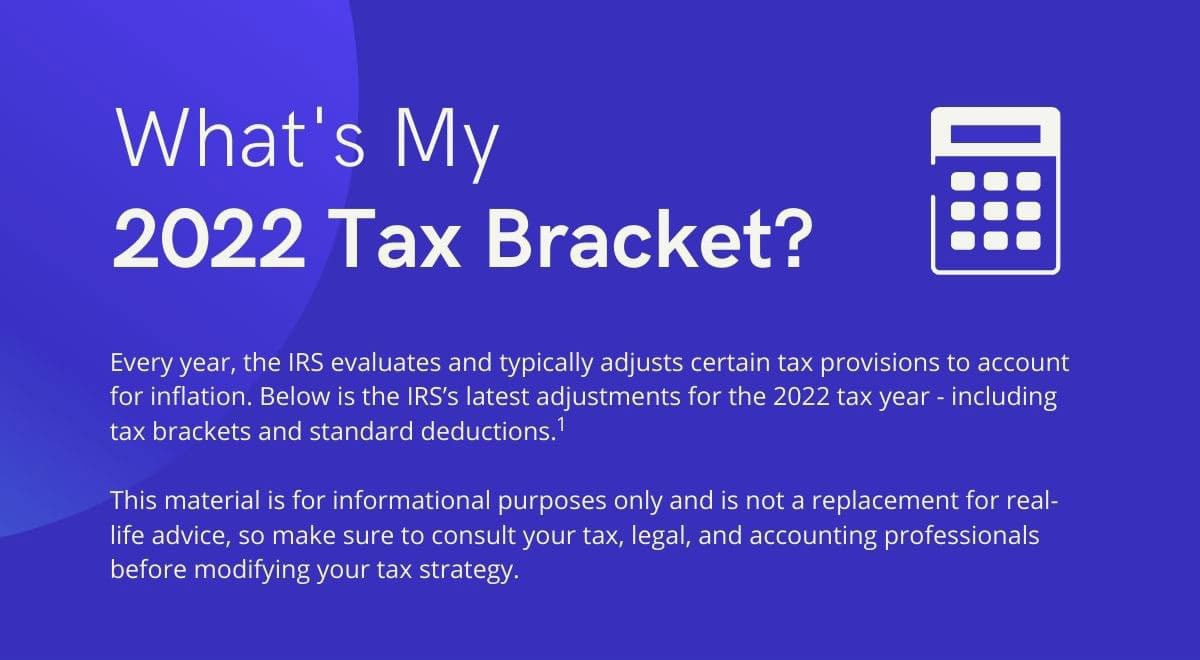
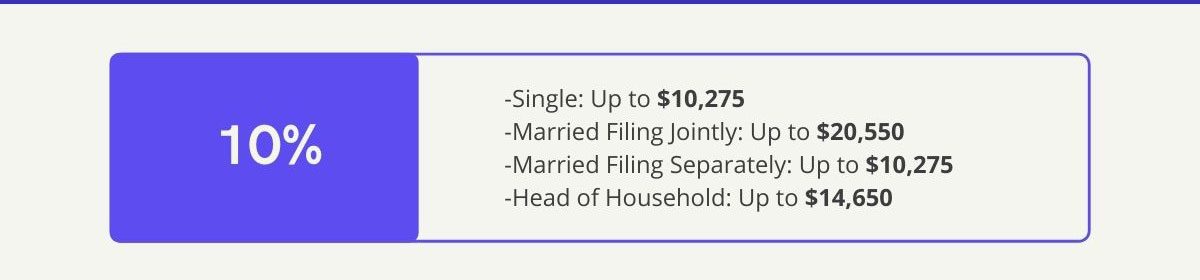
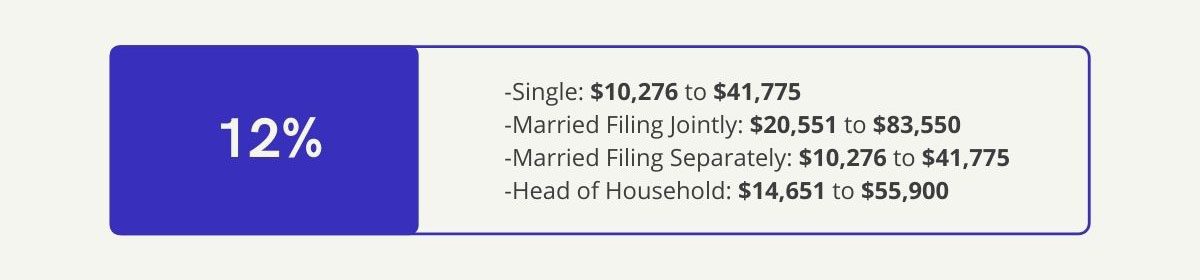
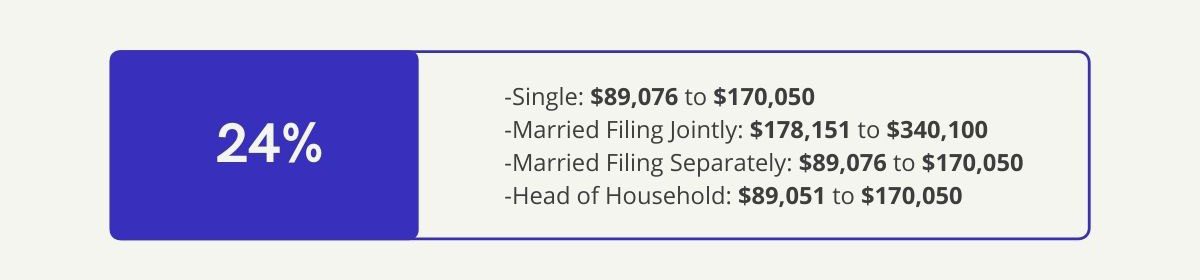
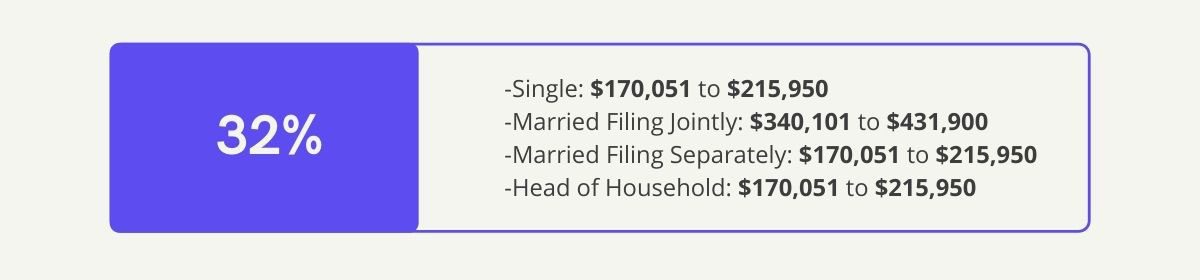
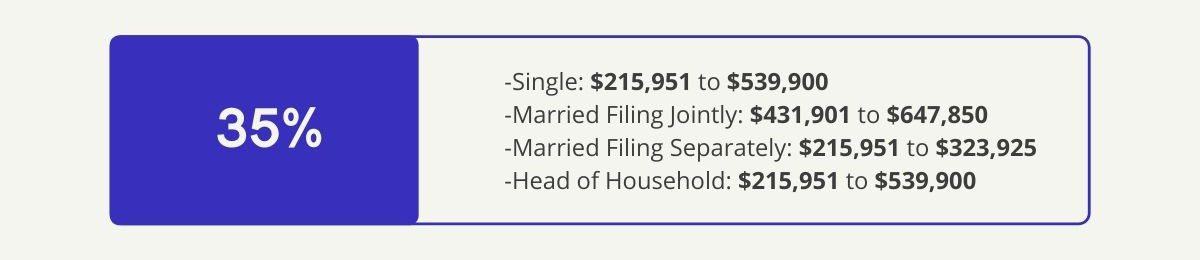
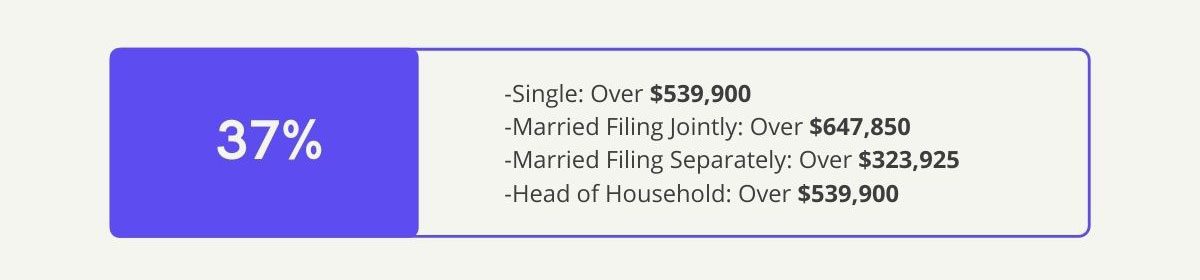
What’s My 2022 Tax Bracket?


Copyright © 2026
Elsass Financial Group

Weekly Market Insight – July 11, 2022

Weekly Market Insights – June 21, 2022

Presented by Elsass Financial Group

Stocks moved lower last week as recession fears deepened following a Fed hike in interest rates and weak economic data.

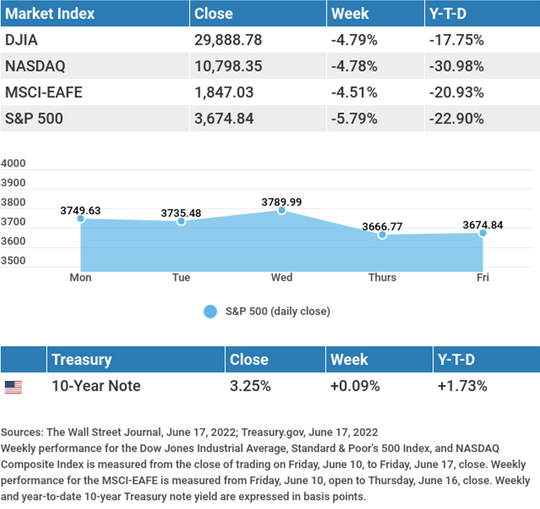
The Dow Jones Industrial Average fell 4.79%, while the Standard & Poor’s 500 dropped 5.79%. The Nasdaq Composite index slid 4.78% for the week. The MSCI EAFE index, which tracks developed overseas stock markets, slumped 4.51%.1,2,3

Stocks Tumble

Stocks were under pressure all week due to inflation worries, higher yields, and rising recession concerns. In advance of the much-awaited mid-week meeting of the Federal Open Market Committee (FOMC), bond yields jumped, and stocks retreated on speculation that the Fed might raise rates by 75 basis points. When the Fed announced a 75 basis point hike on Wednesday, stocks rebounded strongly.

The enthusiasm was short-lived. Stocks resumed their slide on Thursday as global central banks followed with their own rate hikes. Recession fears grew based on a weak housing starts report and a contraction in the Philadelphia Fed Business Index–the first contraction since May 2020.4

Fed Rate Hike 

The Federal Reserve announced a 0.75% hike in the federal funds rate, making it the biggest rate increase since 1994 and signaling its commitment to address inflation. The report from last week’s FOMC meeting also indicated new rate projections, showing that all members expect rates to rise to at least 3.0% by year-end, with half the members expecting rates to rise to 3.375%.5

The 75 basis point rate increase was a late-developing change from earlier Fed guidance of a 50 basis point increase. The change of heart was in response to recent inflation data and rising inflationary expectations.6

This Week: Key Economic Data

Tuesday: Existing Home Sales.

Thursday: Jobless Claims. Purchasing Managers’ Index (PMI).

Friday: New Home Sales. Consumer Sentiment.

Source: Econoday, June 17, 2022
The Econoday economic calendar lists upcoming U.S. economic data releases (including key economic indicators), Federal Reserve policy meetings, and speaking engagements of Federal Reserve officials. The content is developed from sources believed to be providing accurate information. The forecasts or forward-looking statements are based on assumptions and may not materialize. The forecasts also are subject to revision.

This Week: Companies Reporting Earnings

Tuesday: Lennar Corporation (LEN).

Wednesday: KB Home (KBH).

Thursday: FedEx Corporation (FDX), Darden Restaurants, Inc. (DRI).

Source: Zacks, June 17, 2022
Companies mentioned are for informational purposes only. It should not be considered a solicitation for the purchase or sale of the securities. Investing involves risks, and investment decisions should be based on your own goals, time horizon, and tolerance for risk. The return and principal value of investments will fluctuate as market conditions change. When sold, investments may be worth more or less than their original cost. Companies may reschedule when they report earnings without notice.

“In memory everything seems to happen to music.” 

– Tennessee Williams

Things You Can Do on the IRS Website

While the IRS website might not be in your top bookmarks, the website is helpful for a lot of things regarding taxes. Here are just a few things you can do on the site:

  • Use Free File, where you can access brand-name tax software and online fillable forms.
  • Use the IRS e-file system: a safe, easy, and common way to file your tax return.
  • Check the status of your tax refund.
  • Find out how to make payments electronically to pay your federal taxes. You can use a credit or debit card or enroll in the US Treasury’s Electronic Federal Tax Payment System to pay your taxes.
  • Get tax forms and publications, including helpful tips for frequently asked questions.

* This information is not intended to be a substitute for specific, individualized tax advice. We suggest that you discuss your specific tax issues with a qualified tax professional.

Tip adapted from IRS.gov7

Improve Your Swimming with Masters Swim

Swimming is a fantastic full-body, low-impact workout for people of all ages. Check out US Masters Swimming for a club near you as the weather warms up! USMS is an organized swimming club for swimmers of all levels. Swimming with a Masters club is a great way to build camaraderie, meet new friends, get better at swimming, and enjoy a great workout. There are clubs all over the country, likely at a pool near you, which you can find through the Club Finder tool on the USMS website. The coaches will help you start (and stick with) a swimming routine, improve your stroke, and learn more about the sport.

Tip adapted from US Masters Swimming8

It has 18 legs, is uniformed, walks and runs on grass and artificial turf, and catches flies. What is it?

Last week’s riddle: What surrounds everyone and is the end of time and space? Riddle answer: The letter “e.”

Stepped waterfall group Blue Moon Valley, Lijiang, China


Footnotes and Sources


1. The Wall Street Journal, June 17, 2022

2. The Wall Street Journal, June 17, 2022

3. The Wall Street Journal, June 17, 2022

4. CNBC, June 16, 2022

5. The Wall Street Journal, June 15, 2022

6. The Wall Street Journal, June 15, 2022

7. IRS.gov, March 20, 2020

8. usms.org, February 22, 2022

Investing involves risks, and investment decisions should be based on your own goals, time horizon, and tolerance for risk. The return and principal value of investments will fluctuate as market conditions change. When sold, investments may be worth more or less than their original cost.

The forecasts or forward-looking statements are based on assumptions, may not materialize, and are subject to revision without notice.

The market indexes discussed are unmanaged, and generally, considered representative of their respective markets. Index performance is not indicative of the past performance of a particular investment. Indexes do not incur management fees, costs, and expenses. Individuals cannot directly invest in unmanaged indexes. Past performance does not guarantee future results.

The Dow Jones Industrial Average is an unmanaged index that is generally considered representative of large-capitalization companies on the U.S. stock market. Nasdaq Composite is an index of the common stocks and similar securities listed on the NASDAQ stock market and is considered a broad indicator of the performance of technology and growth companies. The MSCI EAFE Index was created by Morgan Stanley Capital International (MSCI) and serves as a benchmark of the performance of major international equity markets, as represented by 21 major MSCI indexes from Europe, Australia, and Southeast Asia. The S&P 500 Composite Index is an unmanaged group of securities that are considered to be representative of the stock market in general.

U.S. Treasury Notes are guaranteed by the federal government as to the timely payment of principal and interest. However, if you sell a Treasury Note prior to maturity, it may be worth more or less than the original price paid. Fixed income investments are subject to various risks including changes in interest rates, credit quality, inflation risk, market valuations, prepayments, corporate events, tax ramifications and other factors.

International investments carry additional risks, which include differences in financial reporting standards, currency exchange rates, political risks unique to a specific country, foreign taxes and regulations, and the potential for illiquid markets. These factors may result in greater share price volatility.

Please consult your financial professional for additional information.

This content is developed from sources believed to be providing accurate information. The information in this material is not intended as tax or legal advice. Please consult legal or tax professionals for specific information regarding your individual situation. This material was developed and produced by FMG Suite to provide information on a topic that may be of interest. FMG is not affiliated with the named representative, financial professional, Registered Investment Advisor, Broker-Dealer, nor state- or SEC-registered investment advisory firm. The opinions expressed and material provided are for general information, and they should not be considered a solicitation for the purchase or sale of any security.

Copyright 2022 FMG Suite.

Copyright © 2026
Elsass Financial Group